The Foundational Pillars of the Japan Artificial Intelligence Industry

Japan's engagement with artificial intelligence is a deeply strategic national endeavor, framed not merely as a technological race but as a fundamental solution to its most pressing societal challenges. The government's vision of "Society 5.0," a super-smart, human-centric society, places AI at its very core, envisioning a future where the digital and physical worlds are seamlessly integrated to improve quality of life and achieve economic development. This top-down, holistic approach is the primary force shaping the Japan Artificial Intelligence industry, which is evolving with a distinct character. Unlike the software-first, consumer-focused disruption seen in Silicon Valley, Japan's AI development is heavily weighted towards industrial application, hardware integration, and solving real-world problems in manufacturing, healthcare, and infrastructure. This pragmatic approach is driven by a powerful coalition of government bodies like the Cabinet Office and the Ministry of Economy, Trade and Industry (METI), large industrial corporations, and world-class research institutions, all working in concert to build a resilient and socially beneficial AI ecosystem. The goal is not just to adopt AI, but to pioneer its application in a way that creates a more sustainable and inclusive society for all its citizens.
The backbone of Japan's AI industry is formed by its powerful and globally recognized industrial conglomerates, or keiretsu. Companies like Toyota, Panasonic, Sony, Fujitsu, and NEC are leveraging their deep engineering expertise, vast R&D budgets, and established global market presence to lead the charge in applied AI. Toyota, through its Woven Planet Holdings, is making massive investments in autonomous driving technology, robotics, and the ambitious "Woven City" project—a living laboratory for AI, robotics, and smart home technologies. Sony is a leader in applying AI to enhance its image sensors, creating intelligent cameras for a variety of applications, and is also pioneering AI in gaming and entertainment. In the B2B space, industrial robotics giants like Fanuc and Yaskawa are integrating AI and machine learning into their factory automation systems to create smarter, more flexible manufacturing lines. Meanwhile, IT service leaders Fujitsu and NEC are developing AI platforms and providing crucial integration services for businesses across sectors, from finance to retail, helping them digitize their operations and harness the power of their data. This deep involvement from established industrial players ensures that AI development is closely tied to tangible, high-value use cases.
While the large corporations provide the scale and industrial might, a growing and increasingly vibrant startup ecosystem is injecting dynamism and innovation into the Japanese AI industry. Although historically smaller than its counterparts in the US and China, the startup scene is gaining momentum, fueled by increased venture capital funding and strong government support programs. One of the most notable pioneers is Preferred Networks (PFN), a deep learning startup that has achieved global recognition for its work in autonomous driving and industrial robotics, often collaborating closely with major corporations like Toyota. Other startups are making significant strides in specialized domains. For example, the healthcare sector has seen the rise of companies developing AI-powered diagnostic tools for medical imaging analysis, while the fintech space is being transformed by startups using AI for credit scoring, fraud detection, and asset management. These agile companies are often better positioned to tackle niche problems and develop disruptive solutions, fostering a more diverse and competitive landscape and ensuring that innovation is not solely confined within the walls of large, established corporations.
The entire industrial and startup endeavor is underpinned by Japan's world-class academic and national research infrastructure. Universities such as the University of Tokyo and Kyoto University, along with national research centers like the RIKEN Center for Advanced Intelligence Project (AIP), are at the forefront of fundamental AI research in Japan. These institutions are not only responsible for pushing the boundaries of knowledge in areas like deep learning, reinforcement learning, and AI ethics, but also for tackling the critical challenge of cultivating the next generation of AI talent. The government has been actively funding programs to increase the number of AI specialists, establishing new AI-focused graduate programs and fostering collaboration between academia and industry. This ensures a steady pipeline of skilled researchers and engineers who can meet the growing demands of the market. The work done in these research centers provides the foundational science upon which companies build their applications, making the academic sector an indispensable pillar of Japan's long-term AI strategy and its ambition to remain a global technology leader.
Explore More Like This in Our Regional Reports:
الأقسام
إقرأ المزيد
PUBG's Resilient Presence PUBG maintains a steady player base, proving its resilience in the gaming market. While other titles may dominate headlines, this battle royale pioneer continues to hold its ground. Its dedicated community and consistent updates ensure it remains a relevant force. The game has evolved significantly since its peak, focusing on long-term engagement over fleeting trends....

The trajectory of the Data Center Network Management Market Growth is being fundamentally shaped by the accelerating adoption of cloud computing and the increasing complexity of hybrid IT environments. This expansion is driven by the recognition that effective network management is essential for ensuring the performance, security, and reliability of modern data center operations....
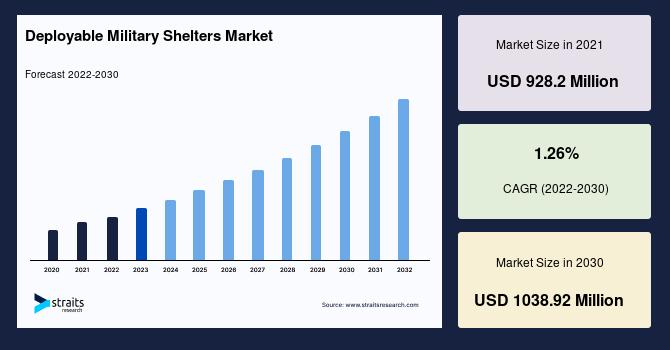
Deployable Military Shelters Industry Outlook: Straits Research has introduced a detailed analytical study on the Deployable Military Shelters Market, offering insights into market valuation, segmentation framework, and long-term growth trajectory. The publication delivers a structured overview of market drivers, constraints, technological advancements, and strategic developments shaping...
In a strategic move to reshape the cybersecurity landscape, Intel Corporation has announced its acquisition of McAfee Inc. for approximately $7.68 billion in an all-cash transaction. This significant investment signals Intel's recognition of the evolving security challenges in our increasingly connected world. The acquisition comes at a time when the definition of computing devices has expanded...
According to Market Research Future, the autonomous shuttles market was valued at USD 5.3 billion in 2024 and is projected to reach USD 80.92 billion by 2035, exhibiting a compound annual growth rate of 28.12% during the forecast period. Among the various operational environments, the Autonomous shuttles market campus segment represents one of the fastest-growing applications, where autonomous...