A Spectrum of Connectivity: Exploring Mission Critical Communication Market Types

Market Type 1: The LMR Foundation (TETRA, P25, DMR)
The foundational and most established of the Mission Critical Communication Market Types is the Land Mobile Radio (LMR) segment. For decades, LMR systems have been the global standard for public safety and critical industry communications, prized for their exceptional reliability and features tailored for group-based operations. This market type can be further broken down by its specific digital standards. TETRA (Terrestrial Trunked Radio) is the dominant standard across Europe, the Middle East, and parts of Asia and Latin America. It is known for its excellent voice quality, fast call set-up times, and robust feature set, including extensive security and data messaging capabilities. P25 (Project 25) is the corresponding standard in North America, developed specifically to ensure interoperability between different public safety agencies within the US. It is designed for high resilience and backward compatibility with older analog systems. A third major standard is DMR (Digital Mobile Radio), which is a more commercially focused and lower-cost digital standard, often used by smaller municipalities, utilities, and transportation companies. While all these LMR types are fundamentally voice-centric with limited data capabilities, their proven track record of "can't-fail" performance in the most demanding environments ensures they will remain a significant and relevant market type for many years, even as broadband emerges.
Market Type 2: Mission Critical Broadband (MCX over LTE/5G)
The second, and most dynamic, market type is Mission Critical Broadband, defined by the 3GPP standards for Mission Critical Services (MCX). This market type represents the future of the industry and is built entirely on modern 4G/LTE and 5G cellular technology. Its core purpose is to augment the reliable voice of LMR with a rich suite of data-driven capabilities. The MCX suite is comprised of three key components. The first is MCPTT (Mission Critical Push-to-Talk), which aims to replicate the essential group-call functionality of LMR over an LTE/5G network, including features like priority, preemption, and emergency calling. The second is MCVideo (Mission Critical Video), which enables users to securely stream and share live video from the field to a command center or between team members, providing unparalleled situational awareness. The third is MCData (Mission Critical Data), which provides a reliable and prioritized mechanism for transmitting a wide range of data, from text messages and file transfers to real-time telemetry from IoT sensors. This market type is not just about the applications themselves, but also the underlying network infrastructure, MCX-capable smart devices, and the software platforms required to manage these services, representing a complete, data-centric communication ecosystem.
Market Type 3: Network Deployment Models (Dedicated vs. Commercial)
A crucial way to segment the market is by the network deployment model, which dictates how the mission-critical services are delivered. The first type is the Dedicated or Private Network. In this model, an organization—be it a government body or a large industrial enterprise like a port or mine—builds and operates its own exclusive LTE or 5G network. This approach offers the ultimate in control, security, and performance customization. The organization has complete authority over coverage, capacity, and security policies, ensuring the network is tailored precisely to its operational needs. However, this model also requires a significant upfront capital investment (CapEx) and the in-house expertise to manage the network. The second type is the Commercial or Public Network Model. In this approach, mission-critical services are delivered as a prioritized service over a public Mobile Network Operator's (MNO) existing nationwide network. The FirstNet network in the US is the prime example, where AT&T provides first responders with priority access. This model offers the key advantages of wide-area coverage at a much lower CapEx for the public safety agency. A Hybrid Model is also common, where a dedicated private network might be used for a critical plant site, with seamless roaming onto a commercial MNO network for workers who travel outside the plant's footprint.
Market Type 4: The Solutions Stack (Hardware, Software, Services)
Finally, the market can be typed by the nature of the solution being procured, which can be broken down into a "solutions stack" of Hardware, Software, and Services. The Hardware type encompasses all the physical components of the system. This includes end-user devices, such as ruggedized LMR radios, LTE smart devices, hybrid radios, and vehicle-mounted modems. It also includes the network infrastructure hardware, such as cell towers, Radio Access Network (RAN) equipment, and the network core hardware. The Software type represents the intelligence and application layer. This includes the command and control dispatch software used in control rooms, the MCX application servers that manage push-to-talk and video services, and the growing array of specialized third-party software for things like video analytics, records management, and real-time mapping. This segment is increasingly moving to a cloud-based, Software-as-a-Service (SaaS) model. The Services type is the human element that binds everything together. This includes strategic consulting to help an agency plan its migration, systems integration services to deploy and test the network, training services for end-users, and long-term managed services for network operation and maintenance. A complete mission-critical solution almost always involves a combination of all three of these market types.
Top Trending Reports:
Categorias
Leia mais
AI Knowledge Work Automation Market According to the latest report published by Data Bridge Market Research, the AI Knowledge Work Automation Market The AI Knowledge Work Automation Market size was valued at USD 5.27 billion in 2025 and is expected to reach USD 14.86 billion by 2033, at a CAGR of 13.8% during the forecast period The market growth is primarily...

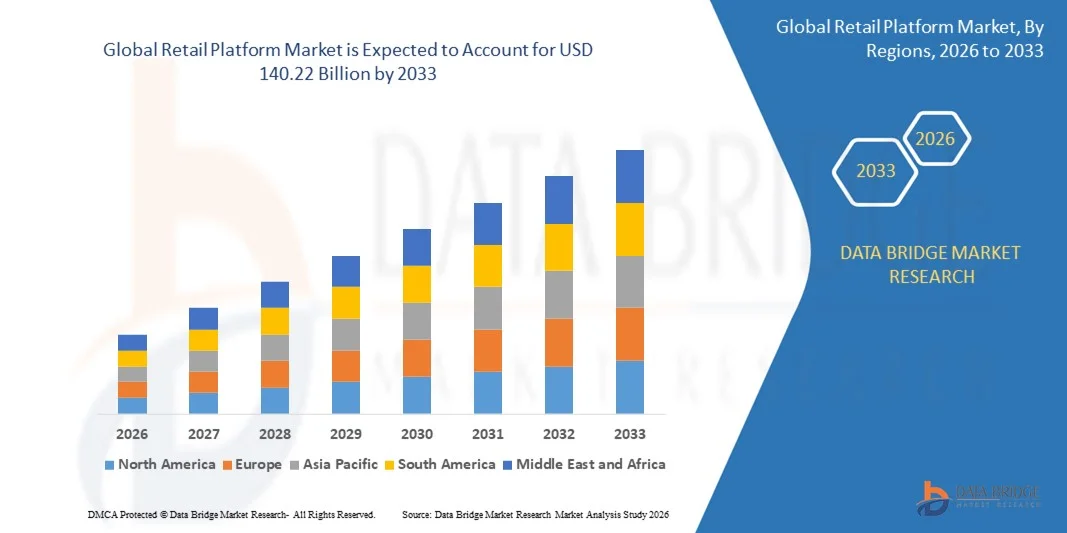
According to the latest report published by Data Bridge Market Research, the Retail Platform Market The global retail platform market size was valued at USD 38.51 billion in 2025 and is expected to reach USD 140.22 billion by 2033, at a CAGR of 17.53% during the forecast period. Global market research analysis report gives out a lot for the business and...
The Grow Medium Market is gaining attention as agricultural producers, greenhouse operators, and indoor farming businesses increasingly adopt advanced cultivation techniques. Grow mediums provide physical support for plant roots while helping regulate moisture, nutrients, and air circulation. These materials are essential for traditional horticulture, hydroponics, vertical farming, and...
Reed Eye, a vital plant for cooks and chemists on Talos-II, is a cornerstone for event participation and base sustainability. While vendors don't stock the harvested grain, your journey begins with foraging. The most reliable wild source is the Cliffside Trail within the Originium Science Park. Travel to the nearest point and scout the path; look for clusters of tall, reed-like grasses. These...
EGR systems are fundamental to modern emission control strategies, recirculating a portion of exhaust gas back into the engine cylinders to reduce combustion temperatures and limit nitrogen oxide (NOx) formation. Mexico EGR systems are essential for achieving the emission reduction targets required by Mexico's environmental regulations. According to the comprehensive Mexico Automotive...