A Taxonomy of Control: The Different Industrial Ethernet Market Types

Categorizing the Factory's Communication Standards
The Industrial Ethernet market is not a single technology but a diverse family of protocols and hardware, each designed to meet the specific demands of the industrial environment. To properly understand the landscape, it is essential to break it down into its different Industrial Ethernet Market Types. The most important way to categorize the market is by its protocol type. These are the application-layer standards that run on top of Ethernet to ensure real-time, deterministic performance for machine control. The major protocol types include EtherNet/IP, PROFINET, EtherCAT, and Modbus TCP. Each has a different underlying architecture, is backed by different industry consortia, and has strengths in different application areas. The market can also be categorized by its hardware component types, which includes the ruggedized switches, gateways, routers, connectors, and cables that form the physical network. Finally, the market can be typed by the services associated with it, such as network design, integration, and security consulting. Examining these different types reveals the rich and complex ecosystem that enables modern industrial automation.
The Protocol Types: EtherNet/IP and PROFINET
Two of the most dominant protocol types in the Industrial Ethernet market are EtherNet/IP and PROFINET. EtherNet/IP stands for "Ethernet Industrial Protocol" and is managed by ODVA. It is an extension of the Common Industrial Protocol (CIP), the same upper-layer protocol used by legacy networks like DeviceNet and ControlNet, which provides an easier migration path for many users. EtherNet/IP is a standard client-server protocol that uses standard TCP/IP and UDP/IP for communication, making it very compatible with standard IT networks and tools. It is heavily promoted by Rockwell Automation and has a leading market share in the Americas. PROFINET, which stands for "Process Field Network," is managed by PROFIBUS & PROFINET International (PI) and is the successor to the Profibus fieldbus. Championed by Siemens, it is the market leader in Europe. PROFINET comes in different "conformance classes," with its real-time (RT) version using standard Ethernet components, while its high-performance, isochronous real-time (IRT) version requires specialized hardware to achieve the extremely low jitter required for high-speed motion control applications.
The Protocol Types: EtherCAT and Modbus TCP
Beyond the top two, EtherCAT and Modbus TCP are two other critically important protocol types. EtherCAT, which stands for "Ethernet for Control Automation Technology," is known for its unique and highly efficient operating principle. Instead of sending separate packets to each device, an EtherCAT master sends a single Ethernet frame that passes through all the slave devices in a logical ring. Each slave device reads the data addressed to it and inserts its own data into the frame as it passes "on the fly," with minimal processing delay. This architecture provides exceptionally high speed and precise synchronization, making EtherCAT a preferred choice for demanding motion control, robotics, and measurement applications. Modbus TCP is a much simpler protocol. It is essentially the classic Modbus serial protocol (one of the oldest and most widely used industrial protocols) encapsulated within a TCP/IP packet. It is not as fast or deterministic as the other major protocols, but it is very simple to implement, open, and widely supported by a vast number of devices. This makes it a popular choice for less time-critical applications, such as connecting supervisory control (SCADA) systems to PLCs or integrating devices from many different vendors.
The Hardware Component Types
The Industrial Ethernet market is also defined by its specialized hardware component types, which are all designed for reliability in harsh environments. Industrial Ethernet Switches are the core of the network. Unlike office switches, they are ruggedized, often fanless, and can be mounted on a DIN rail inside a control cabinet. They come in "managed" versions, which offer advanced features like VLANs, QoS, and network monitoring, and simpler "unmanaged" versions for less critical applications. Industrial Gateways are another critical hardware type. These devices act as translators, allowing communication between different Industrial Ethernet protocols (e.g., from PROFINET to EtherNet/IP) or between a modern Industrial Ethernet network and a legacy fieldbus network. This is essential for integrating new equipment into existing "brownfield" factories. The physical media components are also a distinct type, including ruggedized Ethernet cables with special jacketing to resist oils and abrasion, and M12/M8 circular connectors, which provide a secure, sealed connection that is resistant to vibration, dust, and moisture, ensuring the physical integrity of the network on the factory floor.
Top Trending Reports:
Категории
Больше
In the intense battles of Last Z: Survival Shooter, your hero's leadership sets the stage, but it’s the composition and strength of your troops that truly determine victory. Whether you’re engaging in PvP duels, participating in arena tournaments, or tackling kill events, selecting the right troop units is essential. Strategic troop deployment hinges on more than just increasing...

In the vanguard of computing's next great leap, the ideal neuromorphic chip solution is not merely a piece of silicon, but a comprehensive and accessible platform that combines novel hardware with a robust software ecosystem, enabling researchers and developers to unlock the potential of brain-inspired computing. An effective Neuromorphic Chip Market Solution begins with a scalable...

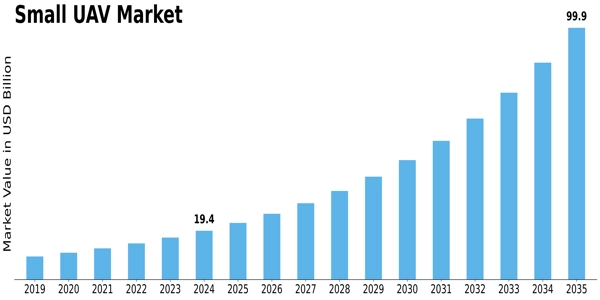
The small UAV market is charting a clear course toward transformation. Forecasts suggest that the global market — estimated at USD 19.45 billion in 2024 — will approach USD 100.11 billion by 2035, representing a CAGR of roughly 16%. Market OutlookAs drone platforms become more sophisticated and regulations ease, many industries are embracing small UAVs for surveying,...
Warner Bros. is poised to become the leading film distributor in Slovakia and the Czech Republic during the first quarter of the year. This success is part of a carefully planned release schedule that includes several major films. In mid-January, the company launched "The Lord of the Rings: The Fellowship of the Ring," which quickly set new box office records in the Czech Republic, attracting...
Exploring the strategic solutions of the US Automotive Sheet Metal Parts Market, covering the critical role of sheet metal parts in lightweight vehicle body construction, key materials, and the market trends shaping the future of automotive body manufacturing through 2035. The US Automotive Sheet Metal Parts Market is a strategic segment of the automotive body manufacturing industry, providing...