A Segmented View: Exploring Quantum Communication Market Types
A Framework for Categorizing a Deep-Tech Industry
The quantum communication market, while nascent, is comprised of several distinct segments that can be categorized to better understand its structure and applications. A useful way to explore the different Quantum Communication Market Types is to segment the market by its core components (hardware, software, and services), its primary application (which is overwhelmingly focused on security), and its key end-user verticals. The component-level segmentation reveals the underlying technology stack. The application-level segmentation highlights the primary business problem the technology solves. The end-user segmentation shows which industries are the earliest and most significant adopters. Understanding these different market types is crucial for navigating an industry that is still deeply rooted in advanced physics and engineering, but is rapidly moving towards real-world commercial and governmental deployment. From the specialized lasers that generate the quantum signals to the government agencies that are the primary customers, each segment plays a critical role in the development of this next-generation security infrastructure.
Segmentation by Component: Hardware, Software, and Services
The quantum communication market can be broken down into three fundamental component types. The Hardware segment is the foundational layer and includes the highly specialized physical devices required to build a quantum link. This is the most R&D-intensive part of the market and includes key components like single-photon sources, quantum state modulators/encoders, high-efficiency single-photon detectors, and the associated optical and electronic control systems. This segment is characterized by a small number of specialized manufacturers and research labs. The Software segment is the intelligence layer that manages the quantum hardware and distills the raw quantum data into a usable product. This includes the key management software that controls the entire QKD process, the post-processing algorithms for error correction and privacy amplification, and the software that integrates the quantum-generated keys with classical encryption devices. The Services segment is an emerging but critical market type. This includes consulting services to help organizations understand the quantum threat and design a quantum-safe strategy, network installation and integration services to deploy the QKD hardware, and managed security services, where a provider might operate a QKD network and sell secure keys "as-a-service" to multiple customers.
Segmentation by Application: The Dominance of Quantum Key Distribution (QKD)
When segmenting the market by application, one type stands out as overwhelmingly dominant in the current landscape: Secure Communication, primarily through Quantum Key Distribution (QKD). At this stage of the market's maturity, QKD is not just the main application; for all commercial purposes, it is the application. All current commercial quantum communication systems are designed to solve one fundamental problem: the secure generation and sharing of cryptographic keys. This market type is focused on providing a future-proof solution to protect data against the threat of both current and future adversaries, including those who may one day possess a quantum computer. While researchers are actively working on other, more futuristic applications that fall under the broader umbrella of quantum communication, these are not yet commercially viable market types. These future applications include distributed quantum computing (linking quantum computers together) and distributed quantum sensing (using entangled particles for ultra-precise measurements). For the foreseeable future, however, the market's growth, revenue, and focus will be almost entirely driven by the demand for QKD as a next-generation cybersecurity solution.
Segmentation by End-User Vertical: The High-Security Adopters
The early adoption of quantum communication is concentrated in a few key industry verticals that have the most to lose from a security breach and the resources to invest in cutting-edge technology. The largest and most important end-user market type is Government and Defense. National governments, military branches, and intelligence agencies are the primary customers, using the technology to secure classified communications, protect military command and control networks, and safeguard critical national infrastructure. Their motivation is national security, which often overrides cost considerations. The second major vertical is Financial Services (BFSI). Banks, stock exchanges, and other financial institutions are prime targets for cyber-attacks and need to protect high-value transactions and sensitive customer data. They are exploring QKD to secure their data center interconnects and to protect their long-term financial records. The Telecommunications sector is another key market type. Telecom providers are looking to integrate QKD into their fiber optic networks to offer ultra-secure "quantum-safe" communication channels as a premium service to their enterprise and government customers. Other potential early adopters include the healthcare industry (to protect long-term patient records) and R&D-intensive industries (to protect valuable intellectual property).
Top Trending Reports:
Categorii
Citeste mai mult
The latest Clash of Clans update introduces significant balance adjustments aimed at creating a more strategic and fair gameplay environment. Key changes include reductions in the power of previously dominant defenses like meteor golems and revenge towers, signaling a shift away from over-reliance on certain strategies. Defenses that were excessively punishing attackers for minor mistakes, such...

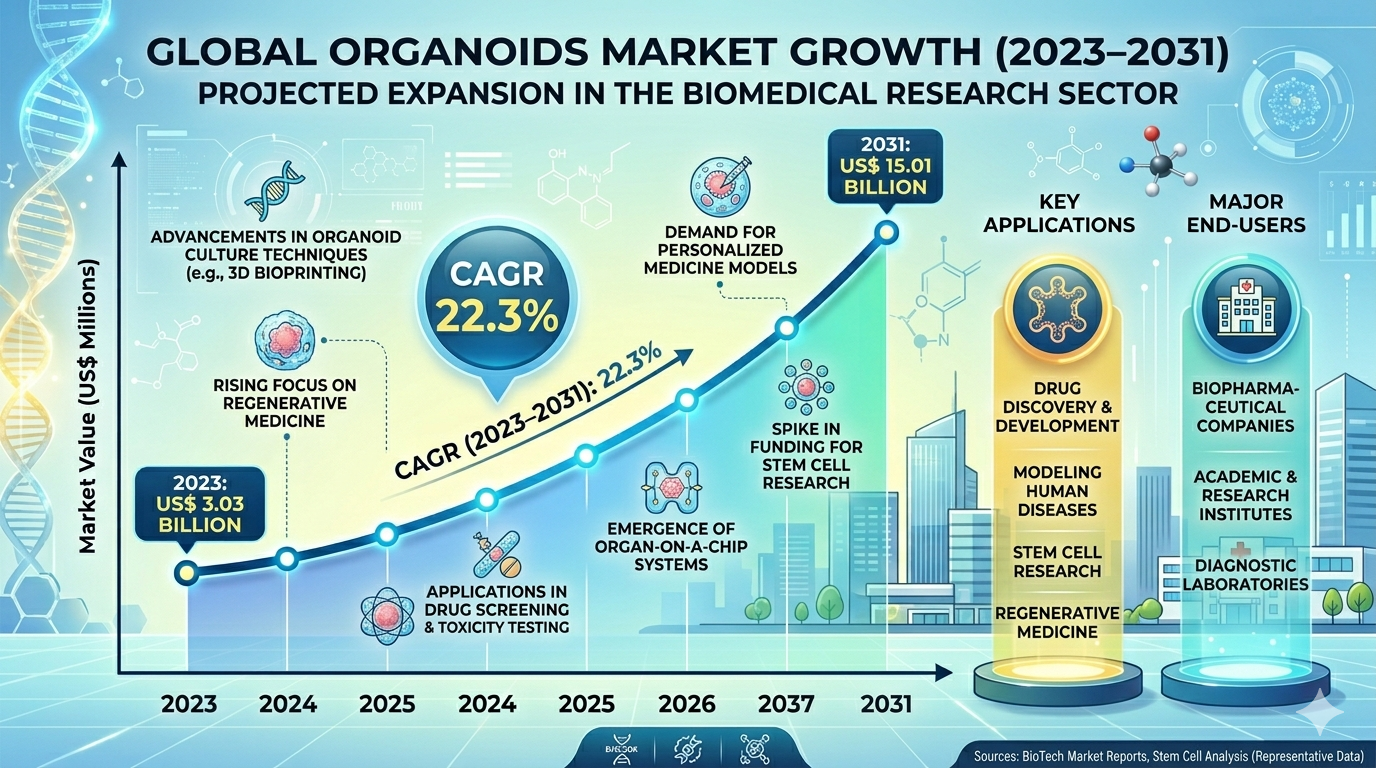
Organoids are advanced three-dimensional cellular structures derived from stem cells that replicate the architecture and functionality of human organs. These innovative biological systems are transforming biomedical research by providing more accurate platforms for studying disease mechanisms and evaluating therapeutic responses. Organoids Market Overview and Growth AnalysisThe Organoids...
Analyzing the Warehouse Management Software Market Trends reveals a clear shift toward artificial intelligence integration, predictive telemetry analytics, and edge-computed efficiency optimization architectures. Modern warehouse management software systems increasingly leverage machine learning to analyze alternative fulfillment data, predict bottleneck discrepancy points, and execute...
I\u2019ll be honest with you\u2014Steel Soul Mode in Hollow Knight: Silksong is a masterclass in anxiety. One life. One tiny slip, and it\u2019s back to Dirtmouth. But you know me, I thrive on that adrenaline. Plus, it\u2019s 2026 now, and if you haven\u2019t at least dipped a toe into Steel Soul, are you even a true fan? The mode hides exclusive goodies like new areas, special NPCs, and the...
As the popularity of “Star Trek” soared, encompassing both the classic series and its films from the 1970s and early 1980s, it became clear that a new television spin-off was inevitable. This led to the creation of “Star Trek: The Next Generation,” which is set approximately 80 years after the original five-year mission of the USS Enterprise. The new series features a...