Battery Connection Systems: The Heart of EV Safety and Efficiency
The battery connection systems of an electric vehicle are far more than simple wires; they are a complex, engineered network of busbars, cables, and connectors designed for safety, efficiency, and manufacturability. These systems are the critical interface between the energy storage unit and the vehicle's powertrain. Insights published by Market Research Future highlight that the integrity and performance of these systems are paramount to EV safety and reliability.
The Complexity of Modern Battery Connections
A modern EV battery connection system must perform several demanding functions. It must carry very high currents with minimal electrical resistance. It must provide reliable mechanical and electrical connections that can withstand the vibration and thermal cycling experienced in a vehicle. It must incorporate safety features like fuses and disconnects to protect against short circuits and overcurrents. And it must be designed for efficient assembly in a high-volume manufacturing environment.
The system typically integrates several components: the high-current busbars connecting modules, the main power cables to the inverter, the low-voltage connections for the battery management system (BMS), and the safety devices. The design of this system is a complex engineering task that requires careful consideration of electrical, thermal, mechanical, and safety requirements.
Advances in Connection Technology
The EV industry is driving significant innovation in battery connection technologies. The shift to larger-format battery cells and cell-to-pack (CTP) designs is changing the architecture of connection systems, demanding more integrated and compact busbar solutions. The use of laser welding and ultrasonic welding for busbar-to-cell connections provides highly reliable, low-resistance joints.
Modular busbar designs are becoming more common, enabling easier assembly and serviceability. The integration of current sensors and temperature sensors directly into the busbar itself is a growing trend, providing real-time data for the BMS and enhancing safety by enabling early detection of anomalies. The ability to monitor these parameters is essential for the advanced battery management algorithms that ensure optimal performance and longevity.
Safety and Manufacturing Considerations
Safety is the paramount concern in battery connection system design. The system must be designed to prevent short circuits, manage thermal events, and provide a safe means of disconnecting power in an emergency. This requires careful insulation, robust mechanical design, and integrated safety features.
Manufacturing efficiency is also a key driver. As automakers scale up EV production, the assembly of the battery connection system becomes a critical bottleneck. Designs that are easy to assemble, with features like snap-fit connections and pre-assembled submodules, are increasingly valued. The trend towards automated assembly of busbar systems is a direct response to the need for high-volume, consistent, and high-quality production.
Future Outlook
The future of battery connection systems will be defined by greater integration, intelligence, and modularity. We will see the development of smart busbars that incorporate not just power distribution, but also sensing and communication capabilities. The use of advanced simulation tools will enable engineers to optimize the thermal, mechanical, and electrical performance of the entire system. The trend towards simplified, modular architectures will improve manufacturability and serviceability. As EV technology continues to advance, the sophistication of these essential connection systems will continue to grow. According to Market Research Future, the advancement of battery connection systems is fundamental to the Electric Vehicle Busbar Market.
Discover emerging opportunities with in-depth research reports:
residential smart gas meter Industry
residential smart gas meter Industry
Categorii
Citeste mai mult
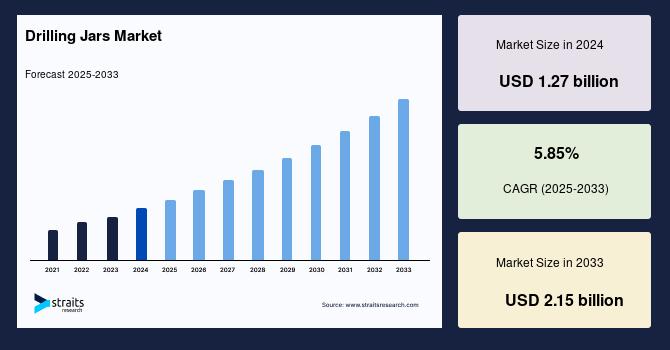
Drilling Jars Market Overview A new report titled “Global Drilling Jars Market Professional Report 2025-2033” has been added by Straits Research to its repository of research reports. The report analyzes and estimates the market on a global, regional, and country level. The report offers data from previous years along with an in-depth analysis from 2025 to 2033 on the basis of...
PUBG’s Season 4 update is now live on PC, bringing a thoroughly overhauled version of Erangel, the game’s original map. The changes range from subtle terrain adjustments to larger layout renovations, all while preserving the familiar geography that veteran players have known since Early Access. Players exploring the map will notice visual improvements and reworked locations that...

Analyzing the global Ballistic Shields market by material and level of protection, covering polycarbonate, UHMWPE, Kevlar, advanced ceramics, composite materials, NIJ Level III, NIJ Level IV, NIJ Level III/IV, and NIJ Level V, with key insights into market segmentation, performance characteristics, and growth opportunities through 2035. The Ballistic Shields Market demonstrates robust...
Riot Games is gearing up for the debut of Episode 4 Act I in Valorant, bringing a host of exciting updates. Among these are a fresh agent, a brand new battle pass, and an array of innovative skins. On January 5, players were introduced to Neon through an intriguing trailer, revealing her energetic and futuristic persona. The upcoming act will also feature a Valentine’s Day-themed battle...
The US Stadiometers Market is growing with the rising adoption of reliable anthropometric measurement equipment in healthcare and clinical settings. Increasing focus on preventive care, pediatric monitoring, obesity management, and routine physical assessments is supporting market demand. The availability of digital, portable, and integrated measurement solutions is further encouraging adoption...