The Future of Data Control: Top Trends in the Global Data Governance Market
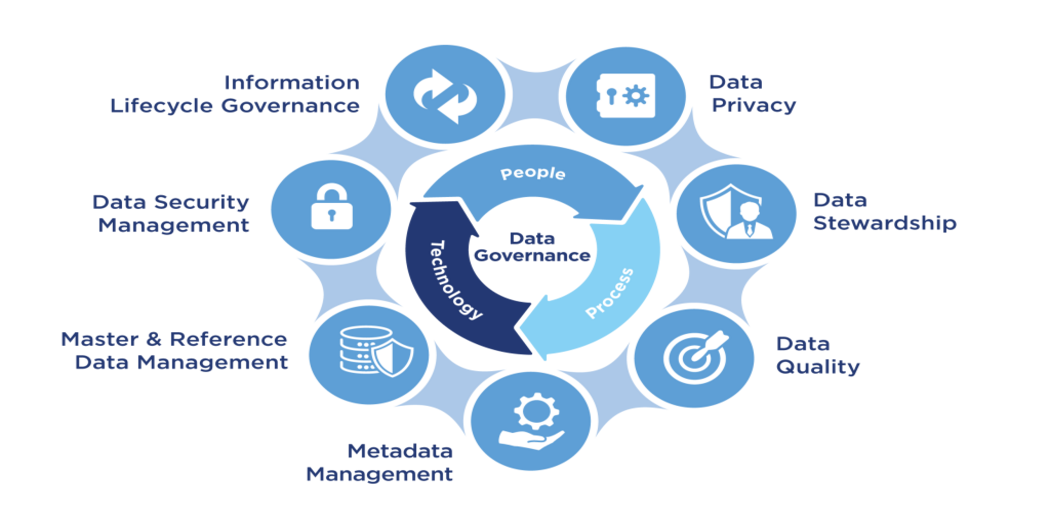
The data governance market is in a state of rapid and profound transformation, evolving from a compliance-driven, IT-led function to a business-centric enabler of digital innovation. To understand where this critical industry is heading, it is essential to monitor the key Data Governance Market Trends that are shaping technology development and enterprise strategies. The most significant trend is the deep and pervasive integration of Artificial Intelligence (AI) and machine learning into the governance platforms themselves. This is a move towards "active data governance," where the platform is no longer a passive repository but an intelligent system that automates and accelerates the governance process. AI is being used to automatically discover and classify data, to recommend data quality rules, to suggest business glossary terms, and even to identify potential data stewards based on who uses the data most. This automation is making governance more scalable and less reliant on manual human effort, which is critical given the explosion in data volumes.
The Rise of the Data Fabric and Data Mesh Architectures
A major architectural trend that is reshaping data governance is the shift away from centralized data architectures towards more distributed models like the "data fabric" and "data mesh." As organizations' data becomes increasingly scattered across multiple clouds and on-premise systems, the old model of physically centralizing all data in one place is becoming impractical. The data fabric is an architectural concept that provides a unified, virtualized layer of data management and governance over this distributed landscape. A data mesh is an organizational and technical approach that pushes the ownership and governance of data out to the individual business domains that create and understand it best. Data governance platforms are evolving to support these trends. They are becoming the central control plane that allows for "federated governance," setting global policies and standards while empowering distributed teams to govern their own "data products" in a consistent and interoperable way.
From Data Governance to AI Governance: A New Imperative
With the massive global investment in Artificial Intelligence, a critical new trend is the emergence of AI Governance as a distinct and vital discipline. Simply governing the data that goes into an AI model is no longer enough; organizations now realize they must also govern the AI models themselves. This trend is driven by a growing awareness of the risks of AI, including algorithmic bias, a lack of transparency (the "black box" problem), and the potential for unintended consequences. In response, data governance platforms are expanding their scope to include capabilities for AI governance. This includes creating a catalog of all AI models in use, documenting their purpose, training data, and performance metrics. It involves tools to test models for fairness and bias, and to monitor their performance in production. As regulations around responsible AI begin to emerge, the ability to demonstrate robust AI governance will become a non-negotiable requirement, creating a massive new growth area for the market.
The Convergence of Governance, Security, and Privacy
For years, data governance, data security, and data privacy were often treated as separate disciplines, managed by different teams using different tools. A powerful and welcome trend is the convergence of these three domains. Organizations are realizing that you cannot have effective security or privacy without good data governance. You cannot protect what you do not know you have. This is leading to a much tighter integration between data governance platforms and security tools. For example, the data classification from a governance catalog can be used to automatically apply the correct encryption and access control policies in a security tool. A security alert can be enriched with business context from the governance platform to help an analyst understand the importance of the affected data. This convergence is leading to the rise of "Data Security Posture Management" (DSPM) as a new category, and is forcing vendors to build platforms that provide a unified view of data from a governance, security, and privacy perspective.
➤ In-Depth Market Studies by Market Research Future:
Κατηγορίες
Διαβάζω περισσότερα
The Heavy Equipment Maintenance Service Market Share Analysis highlights a competitive global landscape where original equipment manufacturers (OEMs), independent service providers, and fleet management companies compete to deliver comprehensive maintenance, repair, and equipment support services. The Heavy Equipment Maintenance Service Market is evolving rapidly as customers...

Call of Duty Mobile’s Season 2: Lunar Charge brings a fresh surge of content that shakes up the gameplay experience with new modes, events, and gear. Launching on February 11 at 4 PM PT, this update celebrates the Lunar New Year (Year of the Horse) and introduces exciting features that will keep both casual and competitive players hooked. One standout addition is the Plunder mode, now...

Warner Bros. Pictures is positioning itself as a powerhouse for franchise development, targeting five major tentpole releases within its yearly production schedule of 25-30 films. This strategy evokes the classic image of Lucy Ricardo frantically managing an overwhelming conveyor belt of chocolates—appearing manageable initially, but quickly becoming excessive. However, Alan Horn, the...
Золотая линия в MLBB больше не является тихим местом для фарма — в мете 2026 года именно от вас как стрелка часто зависит победа в поздней игре. Патч 2.1.61 изменил эмблему стрелка: 5% вампиризма заменили на 5% адаптивного пробивания. Это усилило сборки на урон, но лишило бесплатной стойкости на линии, сделав ранние трейды более рискованными. Теперь выбор героя и ваши действия в первые...
The CNC Cutting Machines Market represents the comprehensive landscape of global precision manufacturing innovations, providing essential technologies that enable accurate, efficient, and versatile material cutting through integrated systems of laser cutting machines, plasma cutting equipment, waterjet cutters, CNC routers, and advanced cutting platforms engineered for maximum precision,...