The Strategic Imperative of India's Evolving Security Operations Center Industry Today

Defining the Nation's Digital Nerve Center
As India accelerates its journey to become a trillion-dollar digital economy, the corresponding surge in cyber threats has made robust security infrastructure a non-negotiable imperative for businesses and government bodies alike. At the forefront of this defense mechanism is the Security Operations Center (SOC), a centralized command hub where an organization's security posture is continuously monitored, analyzed, and defended. A SOC integrates people, processes, and technology to provide a unified and comprehensive view of the threat landscape, enabling the rapid detection, investigation, and remediation of cybersecurity incidents. The phenomenal expansion of the India Security Operations Center industry is a direct response to the increasing sophistication of cyberattacks, stringent regulatory mandates, and the growing recognition that reactive security measures are no longer sufficient. It represents a fundamental shift towards a proactive, intelligence-driven cybersecurity strategy. This centralized function is crucial for correlating threat data from across the enterprise—from networks and endpoints to cloud environments and applications—to identify malicious patterns and orchestrate an effective response, thereby safeguarding critical digital assets, protecting sensitive data, and ensuring business continuity in an increasingly hostile digital world.
In-House vs. Managed: The Great SOC Debate
A critical decision facing Indian organizations is the choice of deployment model for their SOC: building an in-house facility or outsourcing to a Managed Security Service Provider (MSSP). An in-house SOC offers maximum control, deep integration with the organization's culture, and dedicated resources that possess intimate knowledge of the business context and its specific risk profile. This model is often preferred by large enterprises, particularly in the BFSI and government sectors, where data sovereignty and bespoke security requirements are paramount. However, building and maintaining an in-house SOC is a formidable undertaking, requiring significant upfront capital investment in technology, as well as the immense challenge of recruiting, training, and retaining highly skilled cybersecurity talent in a market facing a severe skills shortage. In contrast, the Managed SOC or SOC-as-a-Service model offers a compelling alternative. By outsourcing to an MSSP, organizations gain immediate access to a mature security operation, cutting-edge technology, and a team of seasoned experts, all for a predictable operational cost. This model is particularly attractive for small and medium-sized enterprises (SMEs) that lack the resources for a dedicated facility, allowing them to achieve an enterprise-grade security posture and benefit from the provider's broad threat intelligence gathered across multiple clients.
A Look at the Key Players and Competitors
The competitive landscape of India's SOC market is a dynamic mix of global technology giants, homegrown IT services powerhouses, and specialized pure-play cybersecurity firms. Global leaders like IBM, AT&T, Cisco, and Broadcom leverage their vast global threat intelligence networks, extensive R&D capabilities, and comprehensive technology stacks to offer advanced SOC solutions and managed services to large Indian enterprises. They bring global best practices and a strong brand reputation for security excellence. Competing fiercely are India's own IT services champions, such as Tata Consultancy Services (TCS), Wipro, HCL Technologies, and Infosys. These firms have a deep understanding of the Indian market, long-standing relationships with the country's largest corporations, and the ability to integrate SOC services seamlessly into broader digital transformation and IT managed services contracts. They offer the advantage of local presence, scale, and a large pool of technical talent. Alongside these giants, a growing number of niche, pure-play cybersecurity companies are making their mark by offering highly specialized, agile, and technology-forward SOC services. This intense competition fosters innovation, drives down costs, and provides Indian businesses with a wide array of choices to suit their specific security needs, budget, and risk appetite.
The Future Trajectory: Towards an Intelligent and Automated SOC
The future of the SOC in India is being shaped by the powerful forces of artificial intelligence (AI), machine learning (ML), and extensive automation. The traditional SOC, often overwhelmed by a deluge of alerts from disparate security tools, is evolving into an intelligent, self-learning entity. The next-generation SOC will leverage AI and ML algorithms to automate the detection of complex threats, sift through massive volumes of data to identify subtle anomalies that would be invisible to human analysts, and predict potential attack vectors before they are exploited. Automation, primarily through Security Orchestration, Automation, and Response (SOAR) platforms, will become standard. SOAR will automate repetitive, low-level tasks such as alert triage, threat intelligence enrichment, and initial incident response actions, freeing up highly skilled human analysts to focus on more strategic activities like proactive threat hunting, complex incident investigation, and adversary analysis. This evolution will not only improve the speed and efficiency of threat detection and response but also help mitigate the persistent cybersecurity skills gap. The SOC of the future will be less of a reactive alert-monitoring center and more of a proactive, intelligence-driven hub for managing cyber risk across the entire digital ecosystem.
➤ Featured Insights from Market Research Future:
Kategorien
Mehr lesen
Water Soluble Fertilizers Market According to the latest report published by Data Bridge Market Research, the Water Soluble Fertilizers Market As per Data Bridge Market Research analysis, the water soluble fertilizers market was valued at USD 17.1 billion in 2025 and is projected to reach USD 29.5 billion by 2033, growing at a CAGR of 7.20% from 2026 to 2033. The...

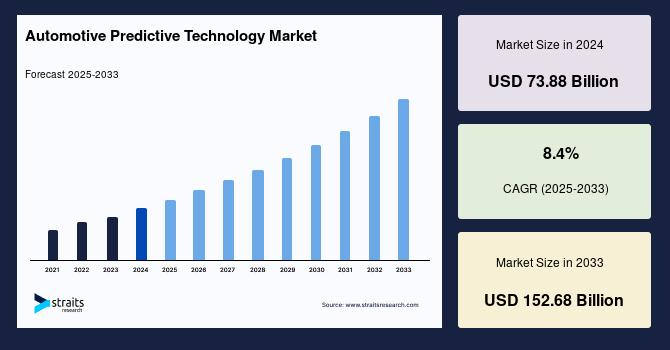
Automotive Predictive Technology Industry Outlook: Straits Research has introduced a detailed analytical study on the Automotive Predictive Technology Market, offering insights into market valuation, segmentation framework, and long-term growth trajectory. The publication delivers a structured overview of market drivers, constraints, technological advancements, and strategic developments...
Often seen as 'Star Trek's' less polished cousin, 'Lost in Space' carved its own niche with family-focused planetary adventures. Netflix now re-launches the Robinson clan into the cosmos, with a fresh season premiering this April. Gone is the straightforward 1960s journey to Alpha Centauri. The new mission is born of necessity—Earth is dying. As part of a colonist fleet, the Robinsons'...
The exponential proliferation of wireless communication networks, sophisticated electronic devices, and high-voltage power transmission infrastructure has elevated public and occupational safety concerns regarding non-ionizing radiation exposure. In this evolving technological context, the Electromagnetic Field Testing Service Market plays a crucial role by providing precise exposure...
Driven by surging global housing finance awareness and the widespread need for frictionless asset tracking, the Home Loan Market Share trajectory remains steep across multiple commercial domains. Key drivers include the rapid deployment of modular automated underwriting systems, digital credit-scoring APIs, and cloud-native loan origination frameworks, high-precision automated...