The Brains Behind the Speed: An Introduction to the Global 5G Core Industry
While the public often associates 5G with faster download speeds on their smartphones, the true revolution of this fifth-generation wireless technology lies deep within the network's central nervous system. The global 5G Core industry (5GC) is the sector responsible for building this new, intelligent, and highly flexible "brain" of the mobile network. Unlike the monolithic and hardware-centric core networks of previous generations (like 4G's Evolved Packet Core or EPC), the 5G Core is designed from the ground up on a completely new set of principles. It is a cloud-native, service-based architecture (SBA) where network functions are implemented as software-based microservices that can run on standard, off-the-shelf servers, either in a private data center or in a public cloud. This software-centric approach provides mobile network operators (MNOs) with unprecedented agility, scalability, and programmability. The 5G Core is the critical component that manages all the key functions of the network—from authenticating users and managing data sessions to routing traffic and enforcing policies—and it is the key enabler for the most advanced 5G use cases, such as network slicing, massive IoT, and ultra-reliable low-latency communications.
The most fundamental architectural shift in the 5G Core industry is the move to a Service-Based Architecture (SBA). In previous network generations, core network functions were implemented as large, tightly-coupled hardware "boxes," with complex, point-to-point interfaces between them. This made the network rigid and difficult to upgrade. The SBA, in contrast, breaks down these monolithic functions into a set of smaller, independent software components called Network Functions (NFs). Each NF is responsible for a specific task, such as the Access and Mobility Management Function (AMF) for handling user connections, the Session Management Function (SMF) for managing data sessions, or the User Plane Function (UPF) for forwarding user traffic. These NFs are designed as cloud-native microservices, meaning they can be deployed in containers, managed by an orchestrator like Kubernetes, and scaled independently. They communicate with each other through a common, standardized bus using modern, web-scale APIs (typically RESTful APIs over HTTP/2). This modular, API-driven architecture makes the network incredibly flexible, allowing operators to easily introduce new services, scale functions up or down based on demand, and rapidly innovate without having to perform a massive hardware upgrade.
Another critical innovation enabled by the 5G Core is network slicing. This is the ability to create multiple, independent, end-to-end virtual networks on top of a single, shared physical infrastructure. Each "slice" can be customized with a specific set of characteristics—such as guaranteed bandwidth, low latency, or high reliability—to meet the unique requirements of a particular application or enterprise customer. For example, an operator could create one slice optimized for high-bandwidth enhanced Mobile Broadband (eMBB) for consumers, a second slice with ultra-reliable low-latency communication (URLLC) for controlling autonomous vehicles or factory robots, and a third slice designed to support a massive number of low-power devices for a smart city IoT deployment. The 5G Core, particularly functions like the Network Slice Selection Function (NSSF) and the SMF, is responsible for managing the creation, modification, and termination of these slices, and for steering user traffic to the correct slice. This ability to partition the network and sell customized "networks-as-a-service" is a revolutionary new business model for operators, allowing them to move beyond selling simple connectivity and to offer tailored, high-value services to a wide range of enterprise verticals.
The 5G Core also introduces a crucial separation between the control plane and the user plane, a concept known as CUPS (Control and User Plane Separation). The control plane is responsible for all the signaling and decision-making in the network, such as authenticating a user or setting up a data session. The user plane is responsible for the actual forwarding of the user's data packets (e.g., their internet traffic). In the 5G Core architecture, the User Plane Function (UPF) is separated from the control plane functions like the SMF. This separation provides immense flexibility in deploying the network. The centralized control plane can be located in a core data center, while the user plane can be distributed to locations closer to the network edge, such as at the base of a cell tower or in an enterprise's on-premises data center. This "edge computing" or "distributed UPF" architecture dramatically reduces latency by keeping the user's data traffic local, which is essential for low-latency applications like cloud gaming, augmented reality, and real-time industrial automation. This architectural flexibility is a key enabler for a new class of edge-native applications and services.
Top Trending Reports:
Categorii
Citeste mai mult
Иногда за виртуальными мирами и аватарами прячутся настоящие истории — трогательные, хрупкие и очень человеческие. Одна из таких историй недавно вновь прозвучала в южнокорейских СМИ, напомнив о том, как сила геймерского сообщества способна дарить надежду даже в самые тяжёлые моменты жизни. Последнее желание среди друзей по игре Всё началось с поста пользователя Urban Mom на официальном...

Water quality is a critical concern for a wide range of applications, from drinking water supply to industrial processes and environmental protection. US Americas modular water treatment plants and US Americas water purification solutions are the key technologies for achieving this, providing the treatment solutions needed to remove contaminants and ensure water quality for diverse...

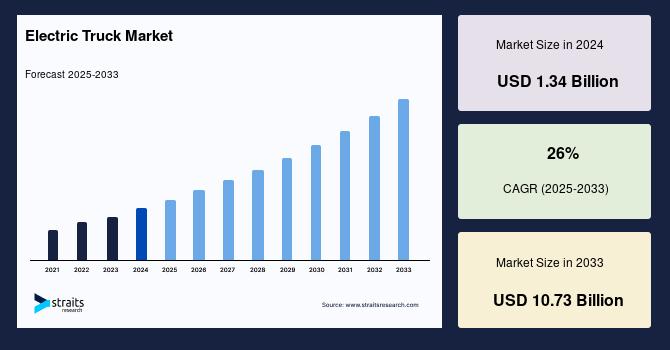
Electric Truck Industry Outlook: Straits Research has introduced a detailed analytical study on the Electric Truck Market, offering insights into market valuation, segmentation framework, and long-term growth trajectory. The publication delivers a structured overview of market drivers, constraints, technological advancements, and strategic developments shaping the industry. In addition, it...
Prepare for a journey where magic meets reality this December. London's Natural History Museum transforms into a portal between worlds. Discover 120 extraordinary exhibits, blending cinematic creatures with natural wonders. Marvel at the Niffler, then encounter the real-world animals that inspired its creation. See the majestic Erumpent alongside critically endangered species from our own...
The 5G Radio Access Network Market Platform is rapidly evolving from a collection of specialized hardware appliances into a powerful, open, and virtualized ecosystem that serves as the intelligent, programmable foundation for next-generation networks. This platform revolution is redefining the value of RAN, moving beyond physical components to offer a software-defined environment that...