The Foundational Mission and Core Technologies of the Global Data Center Cooling Industry
The digital world runs on a foundation of powerful servers, but these servers generate an immense amount of heat, giving rise to the critical and highly specialized Data Center Cooling industry. The core mission of this essential sector is to manage the thermal environment of the data center, ensuring that the vast arrays of IT equipment—servers, storage, and networking gear—operate within their specified temperature and humidity ranges. This is a mission-critical function, as overheating can lead to performance degradation, premature component failure, and, in a worst-case scenario, a catastrophic outage and fire. The industry provides a wide range of sophisticated technologies and solutions designed to continuously and reliably remove the heat generated by the IT equipment and transfer it out of the data center. As the power consumption and heat output of IT equipment continue to rise, the role of the data center cooling industry has evolved from a simple air conditioning problem into a complex challenge of thermal engineering, fluid dynamics, and energy efficiency, making it a cornerstone of data center reliability and sustainability.
The traditional and still most common approach to data center cooling is air-based cooling. In a typical configuration, large Computer Room Air Conditioner (CRAC) or Computer Room Air Handler (CRAH) units are placed around the perimeter of the data hall. These units cool the air, which is then typically delivered into a raised floor plenum. The cold air is forced up through perforated floor tiles and into the "cold aisle," which is the front of the server racks. The servers' internal fans pull this cold air through the equipment, cooling the processors and other components. The now-hot air is exhausted out of the back of the racks into a "hot aisle." This hot air then rises to the ceiling and returns to the CRAC/CRAH units to be cooled again, completing the cycle. A key innovation in air cooling has been the adoption of hot aisle or cold aisle containment, where physical barriers are used to prevent the hot and cold air from mixing. This simple but effective technique dramatically improves the efficiency and predictability of the cooling system, allowing for higher rack densities and lower energy consumption.
A second major category of cooling technology is liquid-based cooling. As the power density of server racks continues to increase, particularly with the rise of AI and high-performance computing (HPC) workloads, air cooling is reaching its physical limits. Air is simply not a very efficient medium for transferring heat. Liquid, particularly water or a specialized dielectric fluid, is far more effective. This has led to the increasing adoption of various liquid cooling techniques. One common approach is rear-door heat exchangers, where a liquid-cooled "radiator" is attached to the back of a server rack to capture the hot exhaust air directly. A more advanced approach is direct-to-chip liquid cooling, where small tubes carry a coolant directly to a "cold plate" that is mounted on top of the hottest components, such as the CPU and GPU, absorbing the heat at its source. This is far more efficient than trying to cool the entire room with air and allows for much higher component power densities.
The most extreme and efficient form of liquid cooling is immersion cooling. In this approach, entire servers are submerged in a tank filled with a thermally conductive, but electrically non-conductive, dielectric fluid. This fluid is in direct contact with every component on the server, providing the most effective possible heat transfer. The heat from the components is transferred to the fluid, which is then circulated out of the tank to a heat exchanger where it is cooled, before being returned to the tank. Immersion cooling can support extremely high power densities and is one of the most energy-efficient cooling methods available, as it eliminates the need for any fans or air conditioning units. While still a niche technology, immersion cooling is gaining significant traction for high-density AI and cryptocurrency mining applications, and it represents the cutting edge of the data center cooling industry. This evolution from room-level air cooling to rack-level and server-level liquid cooling is a defining trend in the industry.
Browse More Related Reports:
Categorie
Leggi tutto
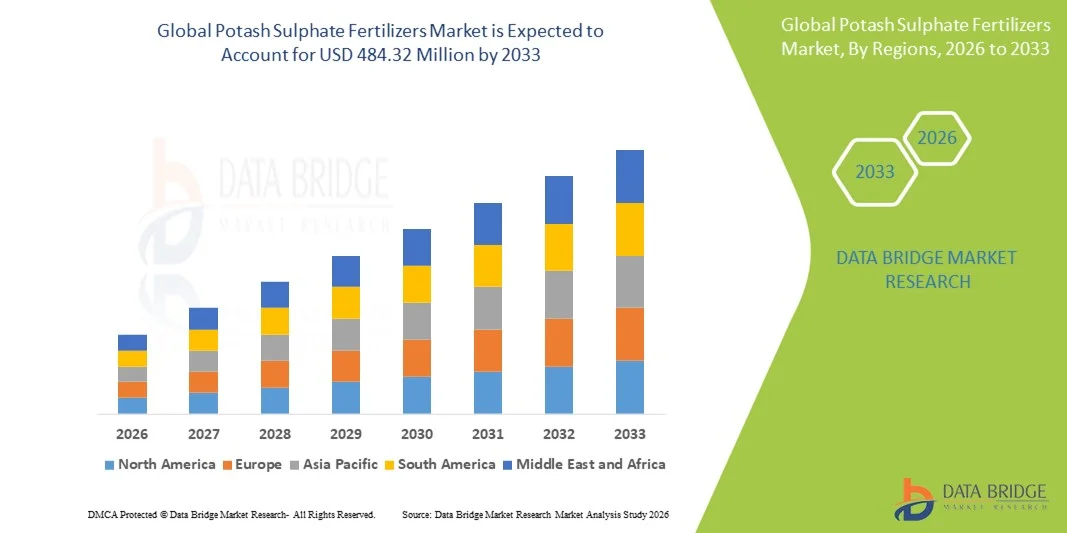
According to the latest report published by Data Bridge Market Research, the Potash Sulphate Fertilizers Market The global potash sulphate fertilizers market size was valued at USD 356.62 million in 2025 and is expected to reach USD 484.32 million by 2033, at a CAGR of3.90% during the forecast period. This Potash Sulphate Fertilizers Market research...
The Network Managed Services Market is on the brink of significant transformation, projected to reach a staggering USD 451.75 billion by 2035, growing at a compound annual growth rate (CAGR) of 12.89%. This robust trajectory underscores the increasing reliance on managed services as businesses navigate the complexities of modern networks. As enterprises prioritize agility, efficiency, and...
A proposed Utah regulation imposes a global burden on service providers, mandating age verification for users physically within the state, even when they employ privacy tools like VPNs or proxies. This legislation, set for enforcement in 2026, creates what critics call an impossible standard for compliance, potentially penalizing legitimate users worldwide who prioritize their online security....

Officer Cui ist ein physischer S‑Rang‑Bangboo, der mit Version 1.1 in Zenless Zone Zero eingeführt wurde. Er gehört zum Criminal Investigation Special Response Team (CI) und fungiert als reiner Support‑Bangboo. Sein Design orientiert sich an einem Polizeihund und verleiht ihm eine starke thematische Identität. Mit seinen Fähigkeiten steigert er vor allem den Schaden von...
A comprehensive Electronic Dance Music Edm Market Analysis reveals a dynamic sector poised for steady expansion driven by streaming platform growth, festival expansion, and technological advancement. Streaming services have transformed how EDM is consumed, providing artists with global reach and fans with unlimited access to music. Playlist curation and algorithmic recommendations expose...