Dissecting the Competitive and Concentrated Global E-Visa Market Share and Its Key Players

The global competition for E-Visa Market Share is a highly specialized and concentrated B2G (Business-to-Government) arena, dominated by a select group of large technology service providers and systems integrators who have the scale, security credentials, and government relationships to win and deliver these massive, nation-scale projects. Unlike a consumer software market with thousands of small players, the E-Visa market has high barriers to entry. Success requires not only deep technological expertise in building secure, scalable platforms but also a profound understanding of consular processes, immigration law, and the unique political and operational requirements of sovereign governments. Market share is typically captured through long, competitive public tender processes, with companies winning multi-year contracts to build, operate, and maintain a country's entire digital visa infrastructure. This has resulted in a landscape where a few key players have established a significant global footprint by building a portfolio of national government clients.
A substantial portion of the market share, particularly in the realm of outsourced visa services, is held by a very small number of specialized companies, with VFS Global being the most prominent and globally recognized leader. These companies operate on a public-private partnership (PPP) model. A government will outsource the entire front-end of the visa application process to them, including, in many cases, the operation of the E-Visa portal. Their market share is built on their unparalleled global network of Visa Application Centers (VACs), their ability to handle secure payments in multiple currencies, and their experience in managing the complex logistics of visa processing for dozens of governments simultaneously. Their strategy is to offer a complete, turnkey solution that allows a government to launch a sophisticated E-Visa program with minimal upfront investment, often on a revenue-sharing basis. This model is incredibly attractive to many governments, allowing companies like VFS Global to become the de facto service provider for a huge number of countries and command a dominant share of the outsourced services market.
Competing for market share, especially in the custom development and systems integration segment, are the large, multinational IT and security technology giants. Companies like Thales, IDEMIA, and Veridos leverage their deep expertise in secure identity documents (like E-Passports), biometrics, and large-scale government IT projects to compete for E-Visa contracts. Their strategy is often to offer a comprehensive "border management" solution where the E-Visa system is just one component of a broader, integrated platform that might also include the passport issuance system and the automated border control e-gates. Their competitive advantage lies in their technological prowess, their high-security credentials, and their ability to act as a prime contractor for massive, complex infrastructure projects. They appeal to governments that want to build a highly customized, state-of-the-art system and prefer to work with a large, established technology partner that has a long track record of delivering mission-critical government systems.
It is also important to note that a portion of the market is addressed by in-house government development or by local, in-country IT companies. Some governments, particularly those with strong internal IT capabilities and a desire for complete sovereign control over their systems, may choose to build and operate their own E-Visa platforms. In other cases, a government may award the contract to a leading national IT services firm as a way of fostering local industry. While these projects may not contribute to the market share of the major international players, they represent a significant part of the overall market activity. The competitive dynamic is often a strategic choice for a government: do they opt for the speed and efficiency of an outsourced model from a global specialist like VFS Global, the cutting-edge technology of a custom build from an integrator like Thales, or the sovereign control of an in-house development project? The answer to this question is what ultimately determines the distribution of market share on a country-by-country basis.
Explore More Like This in Our Reports:
Categorias
Leia mais
The digital isolator market is poised for remarkable growth, with projections indicating an increase in market size to USD 3.33 billion by 2035, reflecting a compound annual growth rate (CAGR) of 5.23%. This growth is fueled by technological advancements and strict regulatory compliance across industries, particularly in automation and safety standards. The necessitation for enhanced energy...

The GCC pressure monitoring accessories & consumables market is experiencing steady growth, driven by increasing investments in healthcare infrastructure and the rising demand for advanced patient monitoring solutions across the region. The GCC pressure monitoring accessories & consumables market size is expected to reach US$ 118.3 million by 2033 from US$ 87.9 million in 2024. The...

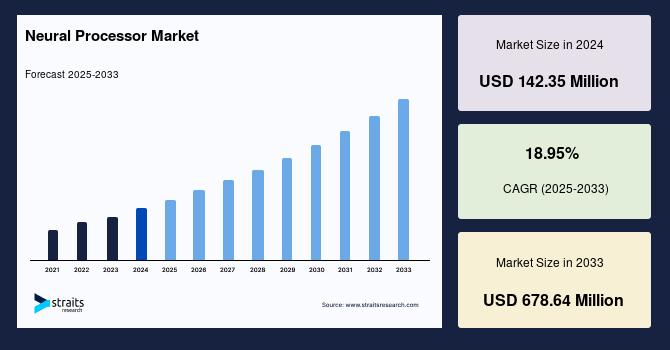
Neural Processor Market Overview A new report titled “Global Neural Processor Market Professional Report 2025-2033” has been added by Straits Research to its repository of research reports. The report analyzes and estimates the market on a global, regional, and country level. The report offers data from previous years along with an in-depth analysis from 2025 to 2033 on the basis of...
The Telematics Market Analysis reveals a rapidly expanding industry driven by the convergence of connected vehicle technologies, data analytics, and digital transportation strategies. Telematics has become a critical component of modern fleet management and mobility ecosystems, enabling organizations to monitor vehicle performance, optimize routes, improve safety, and reduce operational costs....
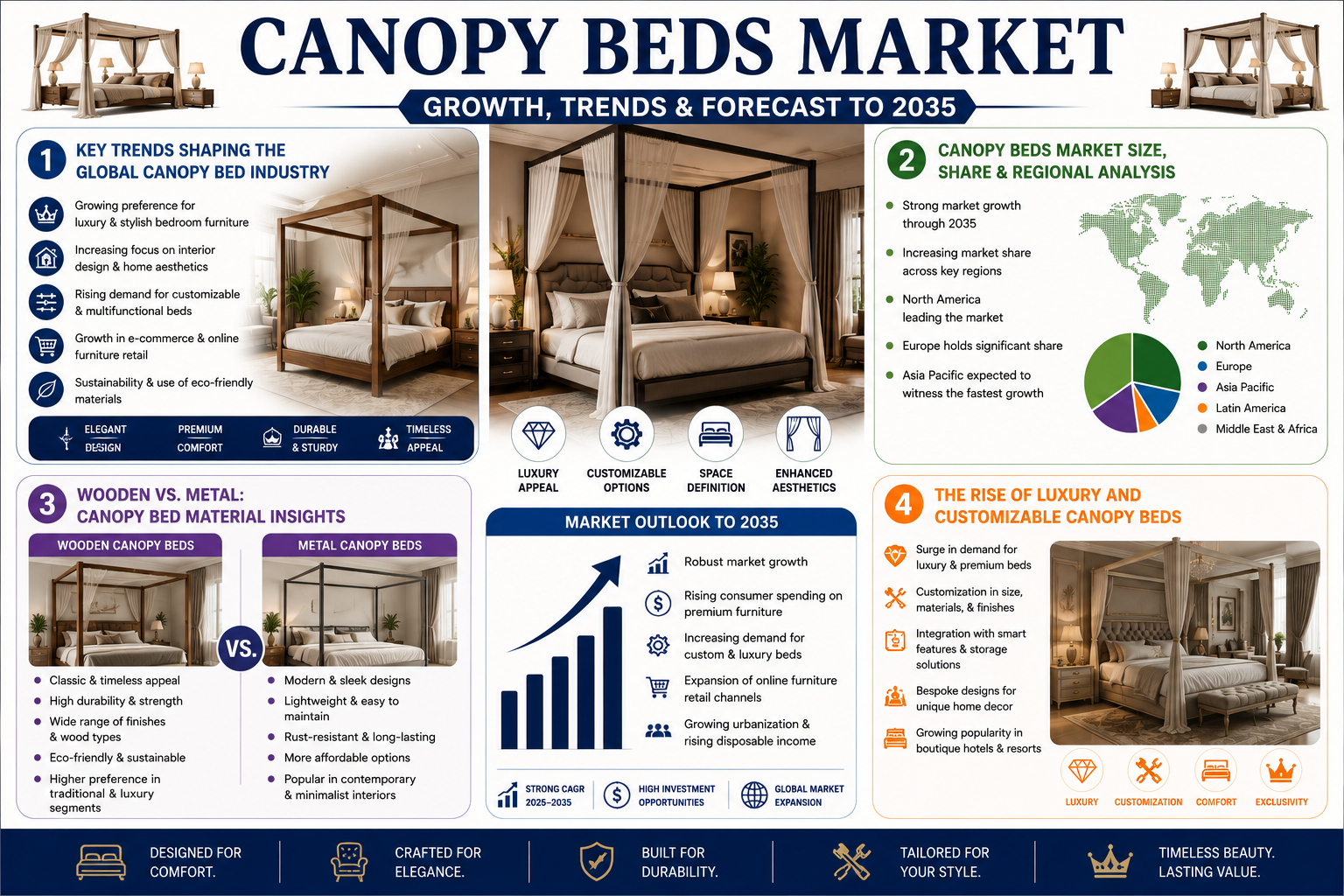
The Canopy Beds market exhibits significant regional variations, with North America leading in market share, while Asia-Pacific emerges as the fastest-growing hub. As per Market Research Future, North America currently holds the largest market share (~45%), driven by rising disposable incomes, a growing trend towards home decor, and increased consumer interest in luxury furnishings....