Defining the Future Battlefield: The Immersive Technology In Military & Defense Industry

The convergence of advanced digital technologies and modern defense strategies has given rise to the highly specialized and rapidly evolving Immersive Technology In Military & Defense industry. This sector is fundamentally revolutionizing how armed forces prepare for, execute, and analyze missions by leveraging Virtual Reality (VR), Augmented Reality (AR), and Mixed Reality (MR), collectively known as Extended Reality (XR). Unlike traditional training methods that are often costly, logistically complex, and carry inherent risks, immersive technologies create realistic, repeatable, and safe synthetic environments for a wide range of applications. From training fighter pilots in hyper-realistic flight simulators to guiding mechanics through complex vehicle repairs with AR overlays and enabling commanders to visualize battlefield data in a 3D holographic space, the industry is providing solutions that enhance performance and save lives. This move from analog and screen-based systems to fully immersive, human-centric platforms represents one of the most significant transformations in military capabilities in decades, driven by the need for a more agile, informed, and effective fighting force in an increasingly complex global landscape. The industry is no longer a niche for R&D but a core component of defense modernization strategies worldwide.
The foundational pillar of this industry is its application in training and simulation. Traditional military training, such as live-fire exercises and large-scale field maneuvers, is incredibly expensive, requiring massive fuel consumption, ammunition expenditure, and logistical support. It also carries significant risks to personnel and equipment. Immersive technology offers a compelling alternative and a powerful supplement. VR-based simulators can replicate the cockpit of a multi-million-dollar fighter jet, the bridge of a naval vessel, or the interior of an armored vehicle with stunning fidelity, allowing soldiers, sailors, and airmen to practice procedures, respond to emergencies, and develop muscle memory in a completely safe environment. Crucially, these simulations can be repeated countless times and can introduce scenarios—like rare equipment malfunctions or complex enemy tactics—that are too dangerous or impractical to replicate in the real world. This approach not only drastically cuts costs and reduces risks but also accelerates skill acquisition and improves cognitive decision-making under pressure. By providing a limitless "virtual sandbox," the industry enables a level of readiness and proficiency that was previously unattainable, ensuring personnel are better prepared for the challenges they will face in actual operational deployments.
Beyond individual skill development, the immersive technology industry is also enabling unprecedented advancements in collective and team-based training. Modern military operations are rarely conducted by individuals in isolation; they are complex, coordinated efforts involving multiple units, platforms, and domains (air, land, sea, cyber). Immersive platforms now allow for the creation of vast, networked synthetic environments where entire squads, platoons, or even joint task forces can train together, regardless of their physical location. A tank crew in one simulator can coordinate with a helicopter pilot in another and infantry on the ground using VR headsets, all interacting within the same virtual battlefield. This capability for networked, multi-domain training is invaluable for honing communication, teamwork, and command-and-control procedures. It allows commanders to test new tactics, techniques, and procedures (TTPs) against a dynamic, intelligent virtual adversary. The ability to connect disparate training systems and personnel into a single, cohesive simulation fosters a level of interoperability and joint-force readiness that is critical for success in contemporary conflict, showcasing the industry's role as a key enabler of modern military doctrine.
The key players shaping the immersive technology in military & defense industry are a diverse mix of established defense prime contractors and innovative commercial tech companies. Large defense giants like Lockheed Martin, BAE Systems, Raytheon, and CAE Inc. have long been leaders in simulation and are now heavily investing in integrating the latest VR and AR technologies into their flagship training platforms. They leverage their deep understanding of military requirements, existing relationships with defense ministries, and expertise in securing complex systems to deliver large-scale, integrated solutions. In parallel, a vibrant ecosystem of specialized startups and commercial XR hardware and software providers, such as Varjo, Vrgineers, and Epic Games (with its Unreal Engine), are pushing the boundaries of what is technologically possible. These agile companies often drive innovation in areas like display resolution, tracking accuracy, and real-time rendering. The resulting dynamic sees defense primes often partnering with or acquiring these smaller firms to bring cutting-edge commercial technology into the highly regulated and secure defense market, creating a symbiotic relationship that accelerates innovation and ensures the warfighter has access to the most advanced tools available.
Top Trending Reports:
Kategorien
Mehr lesen
The Blockchain In Pharmaceutic Market Growth trajectory is intrinsically linked to the escalating global crisis of counterfeit drugs and the ever-tightening web of regulatory compliance mandates. The critical need to protect patient safety and brand reputation from counterfeit medications is a primary catalyst, as blockchain provides an immutable and auditable record of a drug's...

L'Univers Krosmoz De l'étreinte primordiale entre deux forces, naquit un cosmos aux dimensions plurielles. Cet œuf-univers, nommé Krosmoz, abrite les galaxies où prennent vie Dofus et Wakfu. Il est le reflet d'une identité créative unique, mais aussi le socle d'ambitions stratégiques grandissantes. Comme l'entité qui lui donna naissance,...

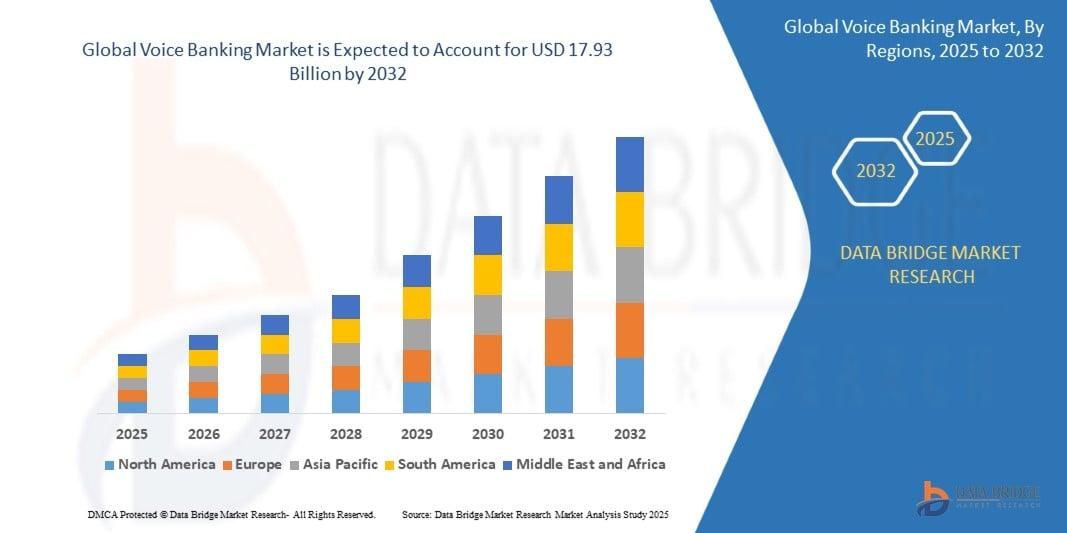
According to the latest report published by Data Bridge Market Research, the Voice Banking Market The global voice banking market size was valued at USD 6.20 billion in 2024 and is projected to reach USD 17.93 billion by 2032, with a CAGR of 14.20% during the forecast period of 2025 to 2032. In addition to the market insights such as market value, growth rate, market segments,...
The disposable syringes market is witnessing robust growth as healthcare systems continue to prioritize infection prevention, patient safety, and efficient drug administration. Disposable syringes have become an essential component of modern healthcare, supporting vaccination programs, chronic disease management, surgical procedures, and routine clinical treatments. Increasing healthcare...
The Field Service Management Market Growth is being accelerated by the shift from product-centric to outcome-based business models, where manufacturers sell uptime guarantees and performance-based service contracts that require sophisticated field service platforms capable of integrating contract lifecycle management with real-time asset telemetry and automatic SLA monitoring....