Center of Excellence: Why Mid-Drive E-Bike Motors Dominate the Premium Market
Walk into any premium e-bike shop, and you will notice a pattern: the expensive bikes have a bulging cylinder at the bottom bracket, while the cheap bikes have a thick hub in the wheel. This visual difference reflects a fundamental engineering divide. Mid-Drive E-Bike Motors have become the gold standard for performance-oriented electric bicycles, offering advantages in hill climbing, handling, and efficiency that hub motors cannot match. Understanding these benefits requires a deep dive into Electric Bike Powertrain Components and how they interact.
The Fundamental Difference: Gearing
The critical distinction between mid-drive and hub motors is whether the motor drives through the bicycle's gears.
A hub motor is fixed to the wheel. Its torque is applied directly to the wheel's rotation, independent of the rider's gearing. If you are climbing a steep hill, you might shift to a low gear (small front chainring, large rear cassette) to make pedaling easier. The hub motor, however, continues spinning the wheel at whatever speed its power curve dictates—which may be much faster than your pedaling cadence. The result is inefficient, as the motor works against the gearing.
A Mid-Drive E-Bike Motor sits at the bottom bracket and drives the chain, just like the rider's legs. When you shift to a low gear for a climb, the motor benefits from that same mechanical advantage. It can spin fast (where electric motors are efficient) while the wheel turns slowly. Consequently, mid-drive motors climb hills dramatically better than hub motors of equivalent power.
Torque Delivery and Climbing Performance
Consider a 250W mid-drive versus a 250W hub motor on a 15% grade. The hub motor might produce 40 Nm of torque at the wheel, but that torque is fixed regardless of gear. The mid-drive, in a low gear (e.g., 32-tooth front, 42-tooth rear, ratio 0.76), multiplies the motor's torque by that gear ratio. If the motor produces 50 Nm at the crank, the wheel receives 50 / 0.76 = 66 Nm—a 65% increase.
This torque multiplication is why Mid-Drive E-Bike Motors are universally preferred for cargo bikes (carrying heavy loads), mountain e-bikes (climbing steep trails), and hilly commutes. A 250W mid-drive can feel more powerful than a 500W hub motor on steep terrain.
Weight Distribution and Handling
E-bikes are heavy, typically 20-30 kg (45-65 lbs). Where that weight is located dramatically affects handling.
-
Hub motor (rear): Concentrates weight at the back, causing rear-heavy handling. The front wheel feels light, reducing steering confidence. Lifting the front wheel over obstacles is difficult.
-
Hub motor (front): Concentrates weight at the front, causing heavy steering and reducing traction on loose surfaces.
-
Mid-drive motor: Places the heaviest component (the motor) low and central, between the wheels. This central mass improves stability, cornering grip, and overall balance.
Riders switching from hub-motor to mid-drive e-bikes consistently report that the mid-drive bike feels "lighter" and "more like a real bicycle"—despite often having similar total weight.
Efficiency and Range
Hub motors are generally more efficient than mid-drives on flat terrain at constant speed. However, real-world riding involves starts, stops, and hills—where mid-drives excel.
The reason is operating RPM. Electric motors are most efficient at high RPM (typically 3,000-5,000 for small motors). Hub motors, turning at wheel RPM (0-300), operate far from their efficiency peak, especially at low speeds. Mid-drive Electric Bike Powertrain Components include a reduction gear (typically 5:1 to 10:1) that allows the motor to spin efficiently while the cranks turn slowly.
On hilly routes, mid-drive efficiency advantages can translate to 10-20% longer range from the same battery capacity. On very steep or stop-start routes, the advantage can exceed 30%.
Drivetrain Wear Considerations
The main disadvantage of mid-drive motors is increased wear on the bicycle's drivetrain (chain, cassette, chainring). Because the motor adds torque to the chain, components experience forces 2-4 times higher than on a standard bicycle.
-
Chain wear: Mid-drive e-bikes typically require chain replacement every 1,000-2,000 miles, versus 3,000-5,000 for non-electric bikes.
-
Cassette wear: Rear gears wear faster, particularly the smaller cogs (used at high speeds).
-
Chainring wear: Some mid-drive systems use special reinforced chainrings.
However, this increased wear is manageable. Quality e-bike chains (e.g., Shimano E-bike specific, KMC e-bike series) are hardened for higher loads. Riders can extend drivetrain life by shifting smoothly, avoiding cross-chaining, and cleaning/lubricating regularly.
The Regulatory Advantage
In the European Union and many other markets, e-bike regulations limit motor power to 250W continuous and assistance to 25 km/h. Within these constraints, mid-drive motors offer superior real-world performance. A 250W mid-drive can climb hills that a 250W hub motor cannot, making it the only viable choice for hilly cities.
Consequently, premium Mid-Drive E-Bike Motors dominate the European market, where 250W limits apply. In North America (where 750W is common), hub motors remain popular at lower price points.
The Future: Integrated Drive Systems
The latest trend is fully integrated Electric Bike Powertrain Components, where the mid-drive motor, battery, and controller are designed as a unified system. Brands like Bosch (Smart System) and Shimano (EP8/EP6) offer complete ecosystems including motor, battery, display, and app. Integration allows for better thermal management, more compact packaging, and seamless communication between components.
Conclusion
For riders prioritizing hill-climbing ability, natural handling, and real-world efficiency, Mid-Drive E-Bike Motors are the clear choice. While more expensive than hub motors, their performance advantages justify the premium for enthusiastic cyclists, cargo haulers, and mountain bikers. As part of a complete Electric Bike Powertrain Components ecosystem, mid-drive systems offer a riding experience that feels less like a machine and more like amplified humanity.
Κατηγορίες
Διαβάζω περισσότερα
The Refueling Aircraft market exhibits significant regional variations, with North America leading in market share, while Asia-Pacific emerges as the fastest-growing hub. As per Market Research Future, North America currently holds the largest market share (~45%), driven by robust defense budgets, technological advancements, and a focus on fleet modernization, led by the United...

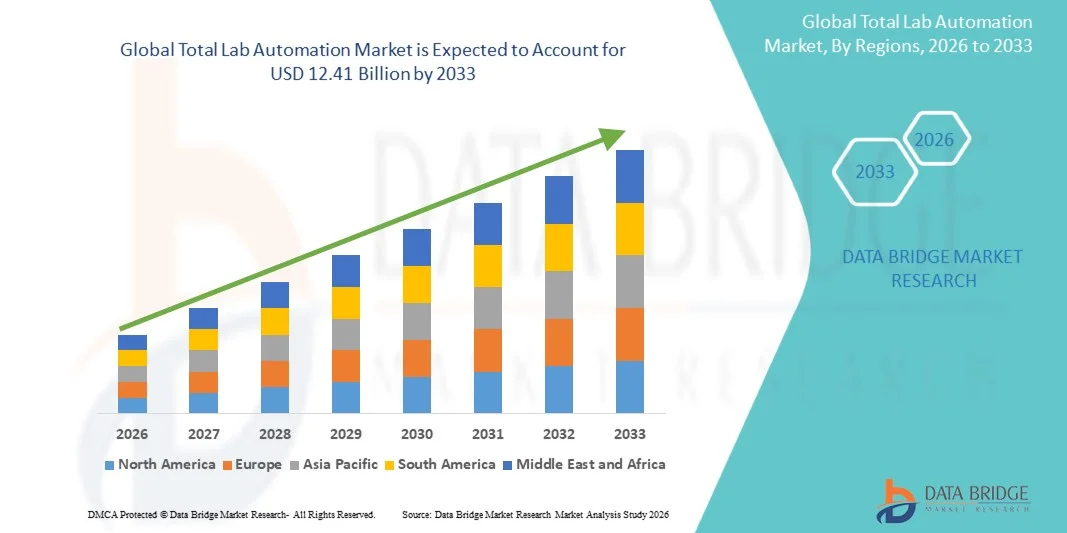
According to the latest report published by Data Bridge Market Research, the Total Lab Automation Market The Total Lab Automation Market was valued at USD 6.91 billion in 2025 and is projected to reach USD 12.41 billion by 2033, growing at a CAGR of 7.60% from 2026 to 2033. The market is witnessing steady expansion driven by rising demand for high-throughput...
The Acrylic Acid Market is expanding steadily as acrylic acid continues to serve as an important chemical intermediate across coatings, adhesives, plastics, textiles, and superabsorbent materials. Increasing industrial consumption and demand for performance-oriented materials are supporting market development. Versatile chemistry supports diverse industrial applications. The Acrylic Acid Market...

The Ultimate Solution for the Enterprise Mobility Security Trilemma Every enterprise today faces a mobility trilemma: how to provide employees with the freedom and flexibility they demand, while maintaining IT control and guaranteeing corporate data security. The Virtual Mobile Infrastructure Market Solution is uniquely designed to solve this fundamental conflict. By hosting mobile apps in a...

The distribution of the Broker Affiliate Programs Market Share reflects a highly competitive and fragmented landscape, where established industry giants coexist with a dynamic array of smaller, specialized players. Market share is not monopolized by a single entity; rather, it is divided among a multitude of brokerage firms, each vying to attract the most productive affiliates. The...