Autonomous Driving Technology: The Core Systems and Innovations Powering Self-Driving Cars
An in-depth examination of autonomous driving technology, covering the sensor suites, AI algorithms, and control systems that enable vehicles to perceive, decide, and act without human intervention.
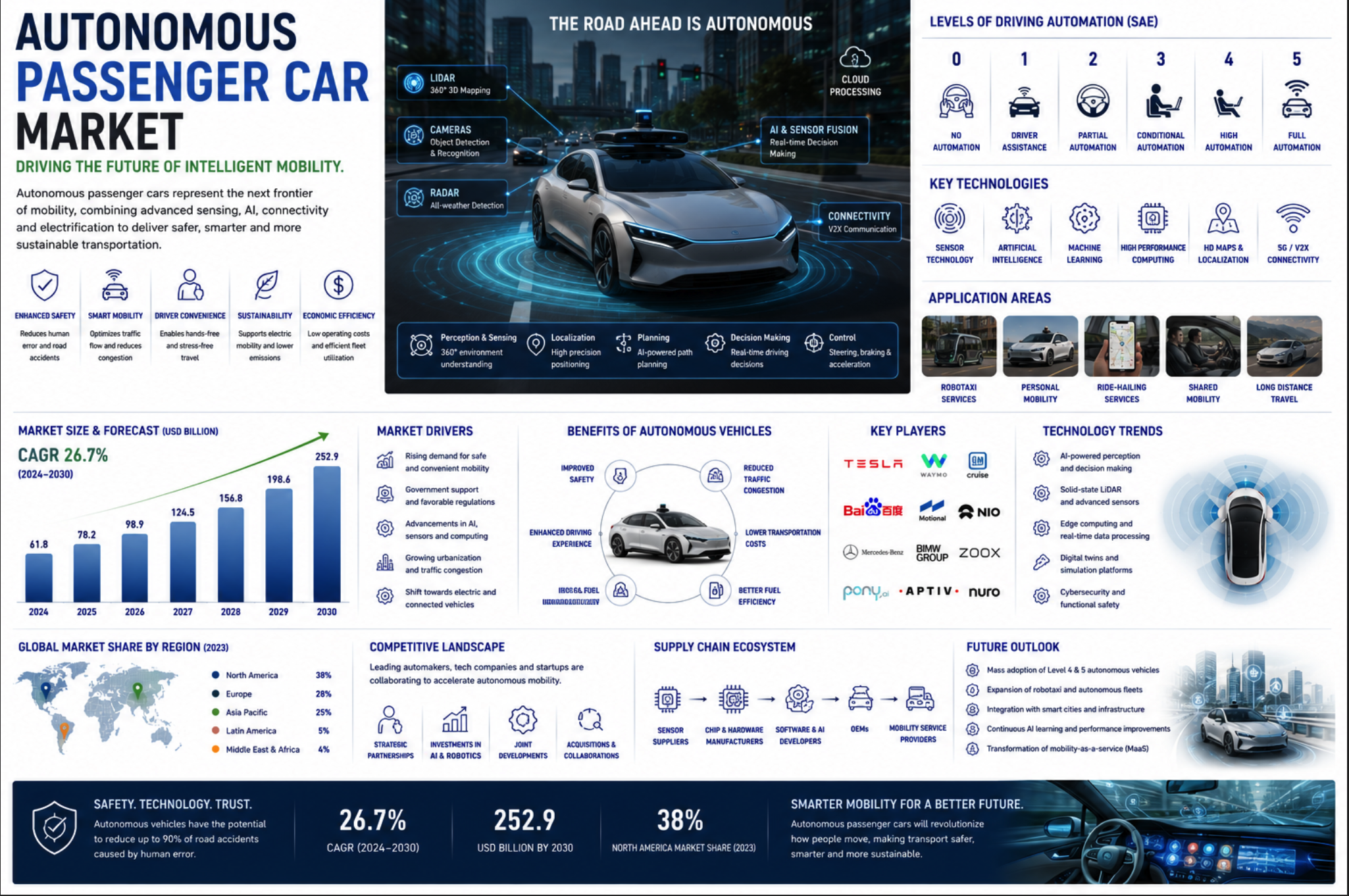
Autonomous Driving Technology represents the convergence of multiple advanced systems that enable vehicles to operate without human intervention. This technology encompasses a complex ecosystem of sensors, including cameras, radar, and Lidar; powerful artificial intelligence and machine learning algorithms; high-definition mapping; and vehicle-to-everything communication systems. The global market for these technologies is experiencing rapid growth, valued at $75 billion in 2024 and projected to reach $250 billion by 2035. Camera systems currently hold the largest market share due to their affordability, robustness, and effectiveness in various lighting conditions, playing a dominant role in visual perception tasks critical for making real-time driving decisions. Lidar, while currently smaller in market share, is rapidly gaining traction as its prices decrease and technology advances, offering precision in depth perception and 3D mapping.
Autonomous driving technology offers a multi-layered approach to vehicle perception and control, enabling safe and efficient navigation in complex environments. The perception layer, utilizing cameras, radar, and Lidar, provides a comprehensive view of the vehicle's surroundings, detecting objects, lanes, and obstacles. The decision-making layer, powered by artificial intelligence and machine learning, interprets this data to plan safe trajectories and make driving decisions. The control layer executes these decisions, managing steering, acceleration, and braking. The growing demand for Autonomous Driving Technology is a direct response to the automotive industry's pursuit of safer, more efficient, and more convenient transportation solutions, as well as the rapid advancements in AI, sensor technology, and computing power.
The adoption of autonomous driving technology is being driven by the potential for significant safety improvements, increased mobility access, and enhanced operational efficiency. The integration of advanced driver-assistance systems (ADAS) is also accelerating the development of higher levels of automation. The market for autonomous vehicle sensors is projected to reach $30 billion by 2030, indicating a robust growth trajectory. The evolution of level of automation is also critical, with Level Two currently dominating due to its widespread adoption in vehicles offering partial automation features. However, Level Five, representing fully autonomous vehicles, is the fastest-growing segment, attracting significant interest from consumers and manufacturers alike, reflecting the industry's long-term vision.
The market for autonomous driving technology is characterized by intense competition and rapid innovation among key players. Companies like Waymo, Tesla, and Cruise are at the forefront, investing heavily in research and development to create more capable and reliable autonomous systems. The integration of artificial intelligence and machine learning is enhancing decision-making capabilities. Vehicle-to-Everything technologies are also enhancing interconnectivity, enabling vehicles to communicate with each other and with infrastructure. In November, Waymo announced a partnership to co-develop next-generation autonomous vehicles, reflecting a collaborative approach to scaling technology and expanding market reach. As the industry continues to innovate and expand, the importance of advanced driver assistance systems (ADAS) will drive further advancement in autonomous driving technology, ensuring that these critical systems can meet the demanding requirements of fully autonomous vehicles.
Categorie
Leggi tutto
Digital Transformation as the Primary Growth Engine The fundamental driver underpinning the spectacular Independent Software Vendors Market Growth is the global, cross-industry imperative of digital transformation. Organizations of all sizes are under immense pressure to modernize their operations, enhance customer experiences, and leverage data to maintain a competitive edge. This...

The global construction industry has long been defined by a set of persistent and seemingly intractable challenges, often referred to as the "iron triangle" of being over budget, behind schedule, and unacceptably dangerous. The Construction Robot Market Solution has emerged as the most powerful and comprehensive answer to these deep-rooted problems. It is not merely a new tool but a...

According to the latest report published by Data Bridge Market Research, the Laboratory Sterilizer Market The global laboratory sterilizer market size was valued at USD 1.40 billion in 2025 and is expected to reach USD 2.68 billion by 2033, at a CAGR of 8.38% during the forecast period This Laboratory Sterilizer Market document combines...

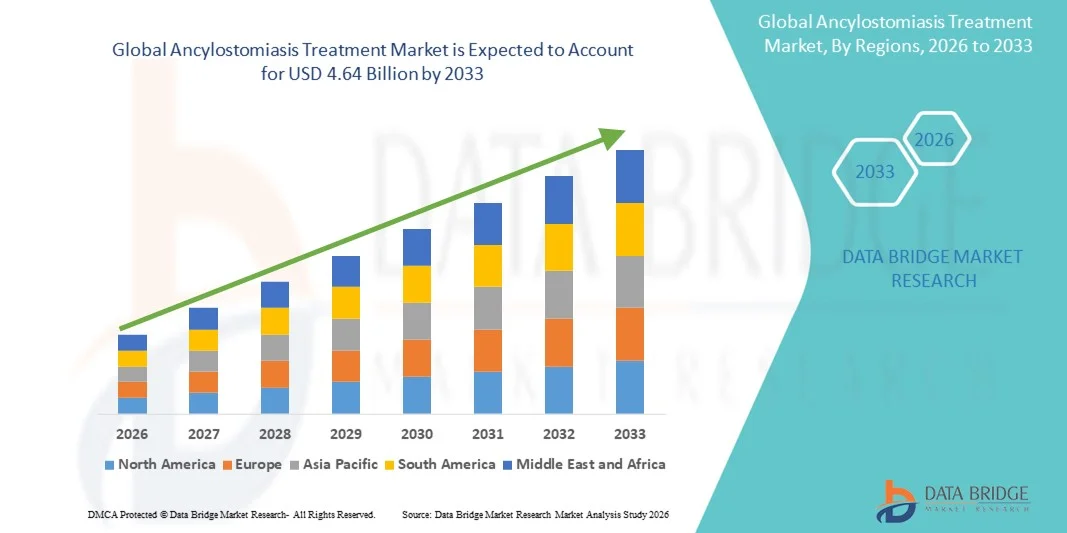
According to the latest report published by Data Bridge Market Research, the Ancylostomiasis Treatment Market The global ancylostomiasis treatment market size was valued at USD 3.34 billion in 2025 and is expected to reach USD 4.64 billion by 2033, at a CAGR of 4.20% during the forecast period. This Ancylostomiasis Treatment Market document...
The February edition of the Netflix ISP Speed Index reveals notable shifts in streaming quality across various regions. Taiwanese provider Fareastone made a remarkable recovery, boosting its average monthly speed by 0.84 Mbps to reach 3.19 Mbps, rebounding from January's dip. Other Asian ISPs also showed improvement; for instance, Globe in the Philippines increased its speeds from 2.23 Mbps to...