Breaking Down Language Barriers: An Overview of the Global Translation Service Marketplace
The Engine of Global Communication
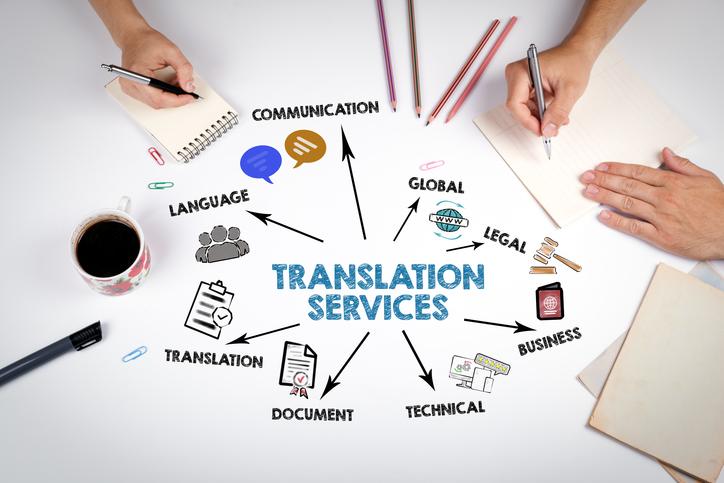
The translation service market stands as a critical and often invisible engine powering the interconnected global economy. In an era where businesses, cultures, and individuals interact across linguistic divides with unprecedented frequency, the ability to communicate clearly and accurately is not just an advantage—it is a fundamental necessity. The global Translation Service industry has evolved far beyond simple word-for-word conversion, blossoming into a sophisticated, technology-driven sector responsible for facilitating international trade, diplomacy, scientific collaboration, and cultural exchange. This multi-billion dollar market encompasses a vast array of services designed to bridge communication gaps in every conceivable context, from translating complex legal contracts and sensitive medical documents to localizing entire software platforms and blockbuster video games for a worldwide audience. As globalization continues to erase geographical borders, the demand for high-quality, nuanced, and culturally appropriate translation services has never been higher. This has spurred significant investment in both human linguistic talent and cutting-edge artificial intelligence, creating a dynamic and highly competitive landscape where precision, speed, and cultural fluency are the currencies of success, ensuring that messages are not just translated, but truly understood across the globe.
A Spectrum of Specialized Services
The translation service market is not a monolithic entity but rather a rich spectrum of specialized disciplines, each tailored to meet a specific communication need. The most widely recognized service is written translation, which involves converting text from a source language to a target language. This can range from translating a simple business email to adapting a complex technical manual or a work of literary fiction, requiring not only linguistic expertise but also deep subject matter knowledge. A distinct but related service is interpretation, which deals with spoken language in real-time. This can be either consecutive, where the interpreter speaks after the source-language speaker has finished a thought, or simultaneous, the high-pressure variant seen in conferences and international forums where the interpreter translates as the speaker is talking. A rapidly growing and highly complex segment is localization (L10n), which goes beyond mere translation to adapt a product or content to a specific locale's cultural context. This includes changing graphics, using appropriate color schemes, adapting formats for dates and currencies, and ensuring the overall message resonates with the target audience without causing unintended offense or confusion. The demand for these varied services highlights the industry's intricate nature and its ability to provide tailored solutions for every cross-cultural communication challenge.
The Key Players in a Diverse Ecosystem
The ecosystem of the translation service market is comprised of a diverse cast of players, each fulfilling a crucial role. At the top of the pyramid are large, multinational Language Service Providers (LSPs). These are full-service agencies that offer a comprehensive suite of translation, localization, and interpretation services, often leveraging sophisticated technology platforms and a global network of linguists to manage complex, large-scale projects for major corporate clients. These LSPs act as project managers, quality controllers, and technology integrators. Occupying the vast middle ground are thousands of smaller, boutique translation agencies, which often specialize in specific industries (such as legal or medical translation) or particular language pairs. They offer a more personalized service and deep niche expertise. The foundation of the entire industry rests upon a massive global workforce of freelance translators and interpreters. These individuals are the linguistic experts who perform the core task of translation, often working with multiple agencies and direct clients. Finally, a new and increasingly influential group of players are the technology providers, who develop the essential tools of the trade, including Computer-Assisted Translation (CAT) tools, Translation Management Systems (TMS), and the powerful Neural Machine Translation (NMT) engines that are revolutionizing workflows across the industry.
Fueling Success Across Key Verticals
The impact and necessity of translation services are felt across nearly every major industry vertical, acting as a critical enabler of global operations and market expansion. In the life sciences and healthcare sector, precision in translation is a matter of life and death. Translating clinical trial documentation, patient records, pharmaceutical packaging, and medical device instructions requires extreme accuracy and adherence to strict regulatory standards to ensure patient safety and global compliance. In the legal field, translation services are indispensable for international litigation, patent filings, and cross-border corporate mergers, where a single mistranslated word can have profound legal and financial consequences. The technology and software industry is one of the largest consumers of translation services, relying heavily on localization to adapt software user interfaces, help documentation, and marketing materials for launch in dozens of international markets simultaneously. The media and entertainment industry uses translation and localization for subtitling and dubbing films and TV shows, translating video games, and adapting websites to engage a global audience. In finance, manufacturing, e-commerce, and travel, translation is the key that unlocks new markets, builds customer trust, and drives international revenue growth, proving its indispensable role in the modern global economy.
Explore More Like This in Our Regional Reports:
Κατηγορίες
Διαβάζω περισσότερα
The competitive landscape within the School Management System market is undergoing significant transformation, driven by a series of technological advancements and changing educational paradigms. Companies are continually innovating to address emerging needs, resulting in a dynamic environment that favors adaptiveness and responsiveness. As educational institutions pivot towards increasingly...

The 3D Accelerometer And Acoustic Sensor Market Analysis reveals a dynamic landscape where condition monitoring applications are driving significant market growth and innovation. These advanced sensors enable continuous assessment of equipment health by detecting changes in vibration patterns and acoustic signatures that may indicate developing faults or performance degradation. The...

The Digital Identity Management Solution Market Future is poised for a transformative shift, driven by the emergence of decentralized identity and the move towards passwordless authentication. In this future, individuals will have greater control over their personal data, sharing only what is necessary for each interaction, while passwords will be replaced by more secure and...

As your game server progresses over time in Kingshot, new characters and functionalities are gradually introduced. This guide offers a general schedule outlining when you can expect these updates to become accessible. Determining the precise age of a server or state can be challenging, but there are practical approaches to get a general idea. One straightforward method involves reviewing your...
Experience Riot's acclaimed titles through Game Pass, with availability starting December 12th. Connect your Riot account to unlock the full suite of games and enjoy exclusive member perks. This integration, first announced earlier this year, now has a confirmed launch date for PC and mobile. Starting next week, Xbox Game Pass subscribers will gain access to a suite of popular Riot Games...