Understanding the Building Blocks: The Key Global Cloud Computing Market Types

The Foundational Layers of the Digital World
The global Cloud Computing Market Types are best understood by classifying them along two primary axes: the service model, which defines the "what" of the service being offered, and the deployment model, which defines the "where" and "how" of its delivery. The service models—Infrastructure as a Service (IaaS), Platform as a Service (PaaS), and Software as a Service (SaaS)—represent a stack of increasing abstraction, where each layer builds upon the one below it. The deployment models—Public, Private, and Hybrid—describe the architectural and ownership structure of the cloud environment. Understanding the distinctions between these different types is fundamental to comprehending the entire cloud ecosystem, as they cater to different user needs, offer different levels of control and convenience, and have distinct competitive landscapes. Together, these market types form the complete menu of options from which modern organizations construct their entire digital infrastructure and application strategy, from the most basic virtual server to the most sophisticated enterprise software.
Service Model Type 1: Infrastructure as a Service (IaaS)
Infrastructure as a Service (IaaS) is the most fundamental and flexible type of cloud service. It provides the core building blocks of computing infrastructure on a rental, pay-as-you-go basis. The key offerings in this category are compute (virtual servers or virtual machines), storage (object storage, block storage), and networking (virtual private clouds, load balancers). With IaaS, the cloud provider is responsible for managing the physical data center, the hardware, and the virtualization layer. The customer is responsible for everything above that, including the operating system, middleware, and their own applications and data. This gives the customer the maximum amount of control and flexibility, closely mimicking a traditional on-premises data center but with the benefits of cloud scalability and economics. IaaS is ideal for a wide range of use cases, including migrating legacy applications to the cloud ("lift-and-shift"), hosting websites and applications with variable traffic, and running big data and high-performance computing (HPC) workloads. The IaaS market is heavily dominated by the major hyperscalers: AWS (with its EC2 and S3 services), Microsoft Azure, and Google Cloud.
Service Model Type 2: Platform as a Service (PaaS)
Platform as a Service (PaaS) is the next layer of abstraction up from IaaS. This market type provides a complete hardware and software platform for developers to build, deploy, and manage applications without worrying about the underlying infrastructure. PaaS offerings typically include the operating system, programming language execution environments, databases, and other development tools, all managed by the cloud provider. This allows development teams to focus exclusively on writing code and building features, significantly accelerating the application development lifecycle. Examples of PaaS include managed database services (like Amazon RDS or Azure SQL Database), container orchestration platforms (like Azure Kubernetes Service or Google Kubernetes Engine), and serverless computing platforms (like AWS Lambda). PaaS is the ideal choice for organizations looking to modernize their application development practices and embrace agile and DevOps methodologies. It provides a powerful middle ground, offering more convenience than IaaS without the rigidity of SaaS, and its market is growing extremely rapidly as businesses prioritize speed and developer productivity.
Service Model Type 3: Software as a Service (SaaS)
Software as a Service (SaaS) is the most widely used and easily understood type of cloud computing. This market type involves the delivery of ready-to-use software applications over the internet, typically on a subscription basis. With SaaS, the provider manages everything—the application, the data, the middleware, the servers, and the storage. The user simply accesses the application through a web browser or a mobile app. This is the most convenient model, requiring zero installation or maintenance from the user's side. The SaaS market is incredibly vast and diverse, encompassing a huge range of applications that have become essential to modern business and personal life. This includes Customer Relationship Management (CRM) systems like Salesforce, collaboration suites like Microsoft 365 and Google Workspace, HR platforms like Workday, and video conferencing tools like Zoom. SaaS has become the default delivery model for most new business software, as it offers lower upfront costs, easy accessibility, and automatic updates, making it the largest segment of the overall cloud market by revenue.
Top Trending Reports:
Catégories
Lire la suite
the u.s. department of justice announced that five individuals pleaded guilty to aiding north korea’s illicit revenue generation schemes, including remote it worker fraud and cryptocurrency theft. as part of this, the u.s. authorities announced actions seeking the forfeiture of $15 million in cryptocurrency from heists carried out by the apt38 threat group, which is linked to the lazarus...

Addressing complex consumer demands for multi-player connectivity and advanced spatial rendering requires comprehensive strategies, making the adoption of Virtual Reality For Consumer Market Solution frameworks a top priority for contemporary hardware manufacturers and software developers. Modern virtual reality solutions extend far beyond basic standalone headsets, encompassing sophisticated...

Le métier de façonneur au niveau 200 sur Dofus Unity se distingue par sa complexité et son coût élevé. En effet, atteindre ce rang requiert un investissement conséquent en ressources et en temps, car les recettes nécessaires pour progresser sont souvent coûteuses et peu rentables. Toutefois, il existe certains crafts...
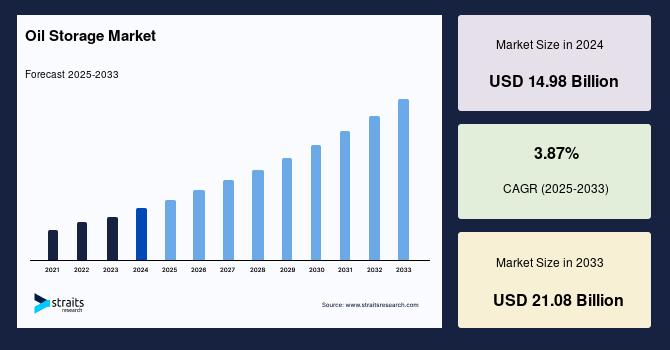
Oil Storage Market Overview A new report titled “Global Oil Storage Market Professional Report 2025-2033” has been added by Straits Research to its repository of research reports. The report analyzes and estimates the market on a global, regional, and country level. The report offers data from previous years along with an in-depth analysis from 2025 to 2033 on the basis of revenue...
Protein hydrolysis enzymes are playing an increasingly important role in improving product quality, processing efficiency, and nutritional value across multiple industries. The Protein Hydrolysis Enzymes Market size is expected to reach US$ 4.71 Billion by 2033 from US$ 2.71 Billion in 2025. The market is estimated to record a CAGR of 7.15% from 2026 to 2033. The protein hydrolysis enzymes...