An In-Depth Introduction to the Dynamic US Field Service Management Industry Today

Defining the Engine of On-Site Operations
The field service management (FSM) sector is the critical, technology-driven backbone that powers the vast mobile workforce responsible for installing, maintaining, and repairing assets outside the traditional office environment. This dynamic and essential market encompasses the complex coordination of personnel, equipment, and information to deliver services on-site, whether it's a technician repairing an HVAC system, a utility worker restoring power, or a healthcare professional providing in-home care. The US Field Service Management industry is characterized by a sophisticated ecosystem of software platforms and mobile technologies designed to optimize every facet of the service lifecycle. From the initial customer call and intelligent dispatching of the right technician to route optimization, real-time job status updates, and on-site invoicing, FSM solutions are designed to drive operational efficiency, reduce costs, and, most importantly, enhance customer satisfaction. As customer expectations, shaped by on-demand services like Uber and Amazon, continue to rise, the role of FSM in delivering a seamless, transparent, and timely service experience has become a primary competitive differentiator for businesses across dozens of industries, transforming it from a back-office necessity to a strategic, customer-facing imperative.
The Core Components of an FSM Platform
Modern field service management is orchestrated through comprehensive software platforms that integrate numerous essential functions into a single, cohesive system. At the heart of any FSM solution is the work order management module, which serves as the central repository for all job-related information, from customer details and asset history to required parts and service level agreements (SLAs). Flowing from this is the scheduling and dispatch component. Advanced FSM platforms use sophisticated algorithms, often powered by AI, to automatically assign the best-suited technician to a job based on their skills, location, availability, and even past performance. This intelligent dispatching is coupled with route optimization to ensure technicians take the most efficient paths between jobs, saving fuel and time. A crucial element is the mobile FSM application, which empowers technicians in the field. This app provides access to work orders, customer history, technical manuals, and allows them to update job statuses, capture photos, order parts, and collect customer signatures in real time. Other vital components include inventory management to track parts in warehouses and service vehicles, contract and warranty management, and robust analytics and reporting to measure key performance indicators (KPIs) like first-time fix rates and technician productivity.
Key Industries and Verticals Served
The reach of the US field service management industry is incredibly broad, touching nearly every sector that relies on a mobile workforce to serve its customers or maintain its assets. The telecommunications industry is a massive user, deploying FSM to manage the installation and repair of internet, cable, and phone services for millions of residential and business customers. The utilities sector, including electricity, gas, and water, depends on FSM for meter reading, new installations, and, critically, for dispatching crews to respond to outages and emergencies. In the HVAC and property maintenance field, FSM is essential for scheduling routine maintenance and responding to urgent repair calls for residential and commercial properties. The manufacturing industry uses FSM to manage the installation, maintenance, and repair of complex industrial equipment and machinery, often as part of proactive service contracts. A rapidly growing vertical is healthcare, where FSM solutions are used to schedule in-home care visits, manage the delivery and maintenance of medical equipment, and coordinate mobile nursing services. Other significant sectors include oil and gas, construction, and logistics, each leveraging FSM to address their unique operational challenges and improve service delivery.
The Evolution from Manual to Digital Operations
The field service management industry has undergone a dramatic evolution over the past two decades, transforming from a largely manual, paper-based process into a highly automated, digital-first operation. In the not-so-distant past, field service was managed through a combination of phone calls, radio dispatches, paper work orders, and clipboards. Dispatchers in a central office would manually schedule jobs, often with little visibility into a technician's real-time location or status. Technicians would have to drive back to the office to pick up new assignments or drop off paperwork, leading to immense inefficiency, delays, and a high potential for errors. The advent of mobile computing, GPS technology, and cloud-based software has completely revolutionized this paradigm. Today's FSM platforms provide a single, shared source of truth that is accessible in real time to everyone in the service chain—from the customer service agent to the dispatcher, the technician, the inventory manager, and the billing department. This digital transformation has not only eliminated inefficiencies and streamlined workflows but has also unlocked new capabilities, such as proactive maintenance and data-driven decision-making, enabling companies to move from a reactive "break-fix" model to a more strategic, predictive service posture.
Top Trending Reports:
Catégories
Lire la suite
Geosaurus in Ochema finden und besteigen Geosaurier sind riesige, gutmütige Reittiere aus Amphoreus, die in der ewigen heiligen Stadt Ochema als Transportmittel dienen. Sie bewegen sich frei auf der vorgegebenen Ausflugsroute, sodass du ihnen an zwei festen Plätzen begegnen kannst: auf dem Pfad der Trennung auf der Südinsel (dort sind sie meist mit Warentransport...

Examining the competitive landscape of the global Vibration Control System Market, profiling key players including Honeywell, Thyssenkrupp, Lord Corporation, Brüel & Kjær, and Schneider Electric, with analysis of strategic developments, market positioning, and growth strategies through 2035. The Global Vibration Control System Market is characterized by a dynamic and moderately...
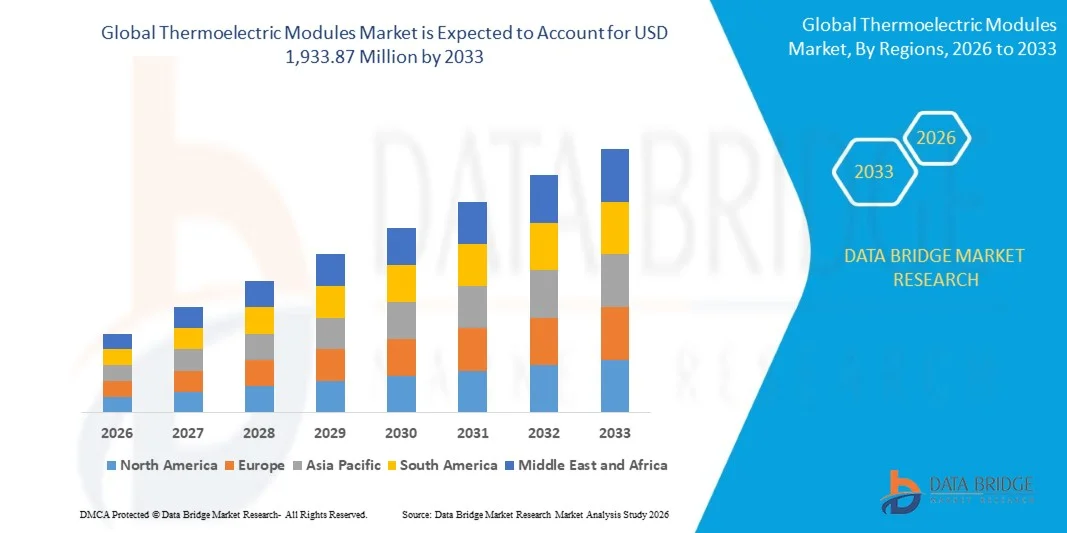
According to the latest report published by Data Bridge Market Research, the Thermoelectric Modules Market The global thermoelectric modules market was valued at USD 950.13 million in 2025 and is projected to reach USD 1,933.87 million by 2033, growing at a CAGR of 9.29% from 2026 to 2033. A talented team works strictly with their potential capabilities to produce...
The dynamics of People Counting System Market Growth are being reshaped by a powerful wave of technological advancements that are redefining traditional business models. The current trajectory is heavily influenced by the global shift towards digital transformation, where automation and intelligent workflows are becoming standard practice. This evolution is creating a fertile environment...

Netflix Viewing Trends: 'Adolescence' Continues to Dominate Streaming Charts 'Adolescence' maintains its impressive performance on Netflix, securing the top position on English TV charts for the third consecutive week with 30.4 million views. The limited series has accumulated a remarkable 96.7 million views in just three weeks, establishing itself among Netflix's most successful TV...