A Detailed Segmental Breakdown of the Diverse Adaptive Optics Market Types

Deconstructing the Ecosystem of High-Performance Optical Correction
The global adaptive optics market is a highly specialized industry comprised of several distinct but interconnected segments. To fully grasp its structure, it is essential to break the market down into its various Adaptive Optics Market Types. This segmentation provides a clear architectural view of the technology, from its individual building blocks to its final application. The most fundamental way to segment the market is by its core components, which include the wavefront sensor that measures errors, the deformable mirror that corrects them, and the control system that orchestrates the process. Another critical segmentation is by the end-user application or vertical industry, as the requirements for an astronomical system are vastly different from those for a biomedical one. Further segmentation can be made based on the type of AO system itself, such as the distinction between conventional systems and more advanced multi-conjugate systems. By analyzing these different market types, a detailed and nuanced understanding of the industry's products, customers, and technological hierarchy emerges, highlighting the specialized nature of this precision technology.
Segmentation by Component: The Three Pillars of AO
The market can be most fundamentally segmented by its three core hardware and software components. The Wavefront Sensor segment represents the "eyes" of the system. The dominant technology in this segment is the Shack-Hartmann wavefront sensor, which is valued for its simplicity and robustness. However, other types, such as shearing interferometers and pyramid wavefront sensors, are also used for specific applications that require higher sensitivity or different performance characteristics. The Wavefront Corrector segment is arguably the highest-value component market. This is dominated by Deformable Mirrors (DMs), which can be further sub-segmented into traditional, large-format mirrors with piezoelectric actuators (used in astronomy) and the rapidly growing market for miniature MEMS-based DMs (used in microscopy and ophthalmology). This segment also includes other corrective elements like liquid crystal spatial light modulators (SLMs), which offer very high-resolution correction but at slower speeds. The Control System segment is the "brain" and consists of the high-speed, real-time processing hardware and the complex software algorithms that drive the closed-loop operation. This segment is often highly proprietary, with vendors differentiating themselves based on the speed and intelligence of their control loops.
Segmentation by End-User Application: A Tale of Diverse Needs
Segmenting the market by its end-user application reveals the diverse range of problems that AO solves. The Astronomy segment is one of the oldest and largest, driven by the need to overcome atmospheric turbulence for ground-based telescopes. This segment demands the largest and most complex AO systems. The Military and Defense segment is another massive market, with applications in long-range surveillance, satellite imaging, and directed-energy laser systems. This market is characterized by stringent performance requirements and a focus on ruggedness and reliability in harsh environments. The Biomedical and Ophthalmic segment is the fastest-growing application area. This includes the use of AO in high-resolution microscopy to image deep within living tissue and in retinal imaging systems for the early diagnosis of eye diseases. This segment prioritizes high resolution and patient/sample safety. The Laser Communication segment is an emerging but high-potential market, using AO to maintain a stable, high-bandwidth optical link for satellite and terrestrial communications. Each of these segments has its own unique performance requirements, budget constraints, and sales channels, creating distinct sub-markets within the broader AO industry.
Segmentation by System Type: Conventional vs. Advanced Architectures
Beyond components and applications, the market can also be segmented by the architectural type of the AO system itself, which reflects its level of complexity and capability. The most common type is the Single-Conjugate Adaptive Optics (SCAO) system. This is the classic AO architecture, which uses a single wavefront sensor and a single deformable mirror to correct for distortions along a very narrow line of sight, typically centered on a single bright "guide star" (either a natural star or an artificial laser guide star). This provides excellent correction in a very small field of view. A more advanced system type is Multi-Object Adaptive Optics (MOAO). MOAO systems use multiple deformable mirrors in the optical path, each dedicated to correcting the view of a single, specific object within a wider field of view, allowing a telescope to observe several different galaxies simultaneously with high resolution. The most complex and advanced system type is Multi-Conjugate Adaptive Optics (MCAO). As previously discussed, MCAO uses multiple DMs conjugated to different atmospheric layers to provide a uniformly sharp correction over a much wider field of view. The market for these advanced system types is currently limited to a few flagship astronomical observatories due to their extreme complexity and cost.
Top Trending Reports:
Categorie
Leggi tutto
In 2025, the internet landscape underwent a significant transformation, fundamentally changing how users access content online. A growing number of nations, including the US, UK, Australia, and several European countries, have instituted mandatory age verification protocols. These measures often involve users scanning identification documents or undergoing facial recognition scans before they...

The Unified Communications Market Growth is being accelerated by the permanent shift toward hybrid and remote work models, which have made seamless, integrated communication and collaboration essential for business operations and created sustained demand for unified platforms that can support distributed teams across time zones and locations. The recognition that hybrid and remote...

According to the latest report published by Data Bridge Market Research, the Cognacs Market The global cognacs market size was valued at USD 5.93 billion in 2025 and is expected to reach USD 7.80 billion by 2033, at a CAGR of 3.50% during the forecast period. The reliable Cognacs Market report is generated by considering the market type, volume of the organization, accessibility...
Earn valuable tokens for the ongoing Star Wars Partners event by participating in the limited-time Way of the Jedi banner. This special event provides a crucial opportunity to collect the resources needed to engage in the main collaboration challenge. Focus your efforts on landing on the designated set tiles scattered across your game boards to accumulate points. You have a 48-hour window to...
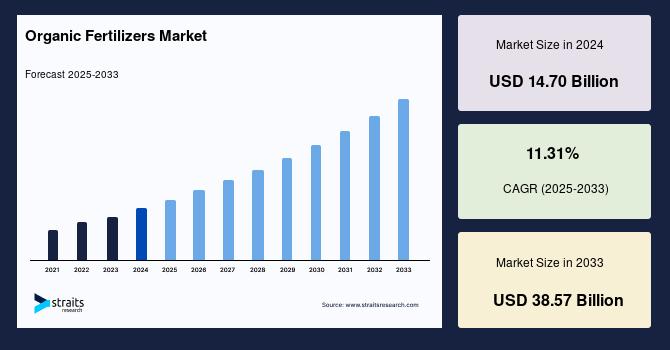
Organic Fertilizers Market Overview A new report titled “Global Organic Fertilizers Market Professional Report 2025-2033” has been added by Straits Research to its repository of research reports. The report analyzes and estimates the market on a global, regional, and country level. The report offers data from previous years along with an in-depth analysis from 2025 to 2033 on the...