A Granular Look at the Different In-Memory Computing Market Types Available

The Core Platform: In-Memory Databases (IMDBs)
The most well-known and foundational category within the in-memory computing landscape is the In-Memory Database (IMDB). As the name suggests, this market type consists of complete database management systems that are designed from the ground up to store the entire operational dataset primarily in RAM rather than on disk. By eliminating the mechanical latency of disk-based I/O, IMDBs can execute queries and process transactions at speeds that are orders of magnitude faster than their traditional counterparts. Prominent examples include SAP HANA, Oracle TimesTen, and VoltDB. These systems are not just faster versions of old databases; they often employ new data structures and query processing algorithms optimized for a memory-centric environment. IMDBs are ideal for applications that demand extreme performance and real-time responsiveness, such as high-frequency trading systems, real-time billing platforms, and the core processing engines for mission-critical enterprise applications. This is one of the most mature In-Memory Computing Market Types, providing a comprehensive, single-vendor solution for high-performance data management.
The Scalable Fabric: In-Memory Data Grids (IMDGs)
A distinct and highly scalable market type is the In-Memory Data Grid (IMDG). Unlike an IMDB, which is typically a single, cohesive database, an IMDG is a distributed system that pools the RAM from a cluster of multiple commodity servers into a single, logical data fabric. This architecture allows IMDGs to scale out horizontally, meaning capacity and processing power can be increased simply by adding more nodes to the cluster. Leading examples include Hazelcast, GridGain/Apache Ignite, and VMware GemFire. IMDGs are often used as an exceptionally fast and scalable caching layer, sitting in front of a slower, disk-based database of record to accelerate application performance. However, their capabilities extend far beyond simple caching. They also provide powerful distributed computing capabilities, allowing applications to execute complex business logic and computations directly on the data where it resides in the grid, a concept known as "data locality." This makes IMDGs a popular choice for building highly scalable, resilient, and high-performance microservices and cloud-native applications.
The Analytical Powerhouse: In-Memory Analytics Platforms
This market type focuses specifically on accelerating Online Analytical Processing (OLAP) and business intelligence (BI) workloads. In-memory analytics platforms are designed to perform complex queries, aggregations, and calculations on very large datasets with interactive, sub-second response times. They achieve this by loading massive amounts of data into RAM and often using a columnar storage format, which is highly efficient for analytical queries that typically scan a small number of columns across many rows. Examples in this category range from features within larger platforms (like Oracle's Database In-Memory option, which adds a columnar in-memory store) to specialized analytical engines. These platforms empower business analysts and data scientists to explore data and discover insights interactively, without having to wait for slow queries to complete. This "speed-of-thought" analysis enables a more fluid and creative data discovery process, leading to better and faster business decisions. They are the engines behind modern interactive dashboards and self-service BI tools.
The Hybrid Solution: HTAP Platforms and In-Memory Caching
The evolution of the market has led to the emergence of hybrid types that blur the lines between the traditional categories. Hybrid Transactional/Analytical Processing (HTAP) platforms are a prime example. These systems, built on an in-memory foundation, are designed to handle both fast, operational transactions (OLTP) and complex analytical queries (OLAP) on the same dataset simultaneously. This eliminates the need for separate systems and the latency of data movement, providing a real-time view of the business. In-memory caching represents another critical hybrid use case. Here, an in-memory solution (often an IMDG) is not the primary database but acts as an intelligent, high-speed buffer for a slower, disk-based system of record. This is a pragmatic and highly effective way to dramatically improve the performance of legacy applications without requiring a full-scale migration. By caching frequently accessed data in memory, these solutions can satisfy the majority of read requests at RAM speed, significantly reducing the load on the backend database and improving overall application responsiveness.
Top Trending Reports:
Catégories
Lire la suite
The trajectory of the Data Platform Market Growth is being fundamentally shaped by the accelerating adoption of cloud-based solutions and the increasing demand for scalable, flexible data management and analytics capabilities. This expansion is driven by the recognition that cloud-based data platforms offer significant advantages in terms of scalability, cost-efficiency, and...

The path back to Hogwarts is paved with immense expectation and profound reverence. ' Sarah Aubrey, overseeing the project, acknowledges the significant weight of adapting such a beloved saga. ' Bringing the literary world to life is a monumental financial and creative undertaking, a commitment rarely seen. ' This endeavor is described as both a high-pressure challenge and an incredibly...

The global box office landscape for "Star Wars: Episode II — Attack of the Clones" is showing signs of decline, with audiences overseas losing interest at a pace comparable to domestic trends. While the film initially performed strongly, recent figures reveal a significant drop, especially in European markets. In Germany, the film's third week saw a steep decline, leading local...
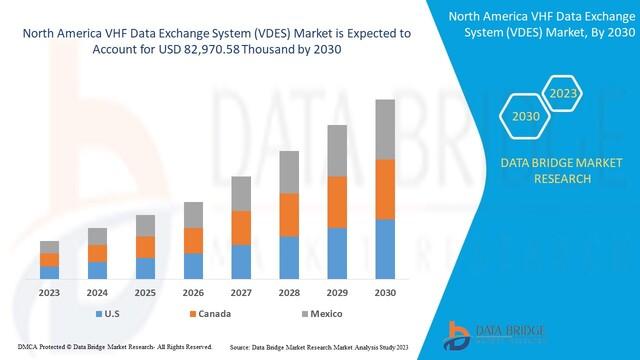
According to the latest report published by Data Bridge Market Research, the North America VHF Data Exchange System (VDES) Market The North America VHF Data Exchange System (VDES) market is expected to reach a value of USD 82,970.58 thousand by 2030, at a CAGR of 15.0% during the forecast period. The North America VHF data exchange system (VDES) market report also covers pricing...
The integration of adaptive learning technologies within the Online Assessment Software Market is fundamentally changing how educational institutions and corporate trainers deliver instruction. Adaptive learning uses data to personalize the training experience, adjusting the difficulty, pace, and content style based on the individual participant's performance in real-time. This...