The Future is Now: Key Trends in the Asia Pacific ERP Software Market
The Rapid Adoption of Cloud-Native and Two-Tier ERP
The most dominant trend reshaping the Asia Pacific ERP Software Market Trends is the accelerated shift towards cloud-native solutions and the strategic adoption of a "Two-Tier ERP" model. Businesses across APAC are increasingly shunning monolithic, on-premise systems in favor of agile, scalable, and cost-effective cloud-based SaaS ERP platforms. This is particularly true for the region's dynamic SME sector, for which the cloud has democratized access to enterprise-grade technology. Beyond SMEs, a sophisticated trend is emerging among large multinational corporations: the Two-Tier ERP strategy. In this model, the corporate headquarters continues to run its robust, complex "Tier 1" ERP (like SAP or Oracle). However, for their smaller, more agile subsidiaries in various APAC countries, they deploy a more flexible and less expensive "Tier 2" cloud ERP. This Tier 2 system can be implemented quickly, is tailored to local regulations, and can seamlessly integrate and feed data back into the corporate Tier 1 system. This approach provides the perfect balance of corporate control and local agility, making it a powerful trend that is driving significant growth for cloud ERP vendors that can effectively serve this Tier 2 market.
The Infusion of AI and Intelligent Automation
The role of ERP is undergoing a fundamental transformation, moving from being a passive "system of record" to an active, intelligent "system of insight." This evolution is being driven by the powerful trend of embedding Artificial Intelligence (AI) and Machine Learning (ML) directly into the core of ERP platforms. Instead of just recording transactions, intelligent ERPs can now analyze data and automate complex processes. For example, in finance, AI can automate the three-way matching of invoices, purchase orders, and receipts, flagging anomalies and reducing manual effort. In supply chain management, ML algorithms can analyze historical data and external factors to generate more accurate demand forecasts, optimize inventory levels across the network, and even predict potential shipment delays. Modern ERPs are also incorporating conversational AI, allowing users to interact with the system using natural language queries, and generative AI is starting to be used to automatically generate financial summaries and narrative reports. This infusion of intelligence is the next frontier of value creation, enabling businesses to not just run their operations but to continuously optimize them in a data-driven, predictive manner.
The Critical Mobile-First Imperative for a Mobile-Centric Region
The Asia Pacific region is unequivocally mobile-first. For a vast portion of the population and business community, the smartphone is the primary, and sometimes only, device for accessing the internet and digital services. This reality has created a critical trend for ERP vendors: the mobile-first imperative. A clunky desktop interface that is simply shrunk down to fit a mobile screen is no longer acceptable. Businesses in APAC demand and expect a seamless, intuitive, and fully-featured mobile ERP experience. This means designing applications with a "mobile-first" mindset, featuring clean dashboards that provide at-a-glance KPIs, simple, touch-friendly workflows for common tasks like expense reporting and purchase order approvals, and the use of native device features like the camera for barcode scanning or GPS for tracking assets. This trend is crucial for supporting the region's increasingly mobile workforce, from sales representatives in the field to warehouse managers on the floor to executives traveling between countries. An ERP vendor's ability to provide a powerful and user-friendly mobile experience is no longer a nice-to-have feature; it is a critical factor for adoption and a key competitive differentiator in the mobile-centric APAC market.
The Rise of Composable ERP and Industry-Specific Solutions
The era of the one-size-fits-all, monolithic ERP system is gradually giving way to a more flexible and agile trend: the "composable ERP." In this new paradigm, instead of buying a single, all-encompassing suite from one vendor, businesses are increasingly looking to assemble a "best-of-breed" technology stack. They might choose a core financial ERP from one vendor, a specialized CRM from another, and a best-in-class HCM platform from a third. This approach allows them to select the very best application for each specific business function. For this to work, it requires that the ERP system has a modern, API-first architecture, allowing it to easily integrate with other cloud services. This trend is driving demand for Integration Platform as a Service (iPaaS) solutions. Running parallel to this is the growing demand for vertical-specific solutions. Recognizing that the needs of a textile manufacturer in Vietnam are very different from those of a fintech company in Singapore, ERP vendors are increasingly offering pre-configured, industry-specific versions of their software. These "verticalized" solutions come with built-in workflows, data models, and compliance features tailored for a particular industry, offering a faster time-to-value and a deeper fit for the customer's unique business processes.
Top Trending Reports:
Categorii
Citeste mai mult
HoYoverse has officially confirmed that Snezhnaya will be the next major region in Genshin Impact, with a behind-the-scenes developer preview scheduled for April 24, 2026 at 8:00 AM UTC-4. The announcement was made across the game’s official social media channels, marking the first time the Cryo Nation will receive an official preview. While Nod-Krai served as a preliminary detour under...

The DNA Sequencing Electrophoresis System Market is witnessing steady growth as genomic research, molecular diagnostics, and precision medicine continue to gain importance across healthcare and life sciences. Increasing investments in biotechnology research, advancements in sequencing technologies, and rising demand for accurate genetic analysis are encouraging the adoption of advanced...
In the tactical FPS landscape, Valorant stands out due to its unique agent abilities, especially the powerful ultimates that can sway the outcome of rounds dramatically. Each agent’s ultimate is their most potent skill, often capable of turning the tide in clutch moments. Not all ultimates are created equal; some dominate the meta, while others serve more niche roles. The game’s...
Wuthering Waves has officially released Version 3.2, titled “Resolution to Iluminate the Shadows,” across all platforms. Since its launch in May 2024, the game has grown rapidly, introducing the nation of Lahai-Rai with motorbike traversal in Version 3.0, the Frostlands Surface area in Version 3.1, and earning a Player’s Voice win at The Game Awards 2025. The latest patch...
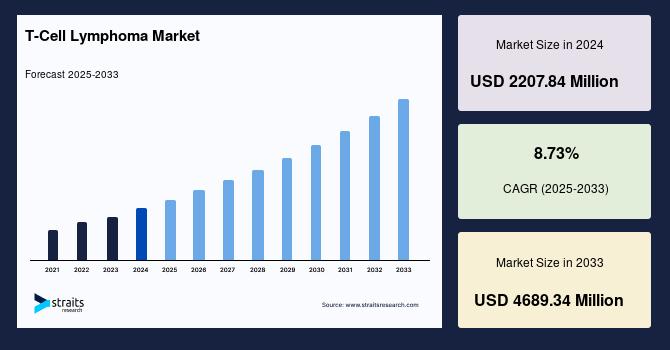
T-Cell Lymphoma Industry Insights: Straits Research recently introduced the latest update on the T-Cell Lymphoma Market that provides an extensive outlook of the market, analyzing key growth opportunities, challenges, risk factors, and emerging trends across diverse geographic regions. The report offers a definitive and meticulous analysis of the T-Cell Lymphoma industry size,...