Examining the Competitive Landscape of the Contactless Smart Card Market Share

The Oligopoly of Global Card Manufacturing Giants
The manufacturing and personalization segment of the contactless smart card market is highly concentrated, with a small group of global giants commanding the majority of the Contactless Smart Card Market Share. Companies like Thales Group (following its acquisition of Gemalto), IDEMIA, and Giesecke+Devrient (G+D) form a clear top tier. These European-based behemoths have established their dominance through decades of investment in research and development, a global manufacturing and service footprint, and deep, long-standing relationships with the world's largest banks, mobile network operators, and government agencies. Their market share is built on a foundation of trust and a proven ability to deliver on massive, complex, and highly secure projects, such as nationwide deployments of e-passports or the issuance of tens of millions of credit cards for a major financial institution. These companies offer an end-to-end portfolio that includes not just the physical card but also the secure operating system on the chip, the personalization services to load customer data, and the backend systems for managing the card's lifecycle. This integrated offering, combined with their extensive portfolio of security certifications, creates a formidable barrier to entry for new competitors and solidifies their control over a large portion of the market.
The Crucial Role of Semiconductor and Chip Providers
Beneath the layer of card manufacturers lies another critical and highly concentrated segment of the value chain: the providers of secure microcontrollers. Companies like NXP Semiconductors, Infineon Technologies, and STMicroelectronics are the unsung heroes of the contactless smart card industry. They design and manufacture the tiny, powerful, and highly secure chips that are the heart of every smart card. These semiconductor giants hold a significant portion of the market share for the core technology and are pivotal to the industry's innovation. Their R&D efforts are focused on creating chips that are smaller, more powerful, more energy-efficient, and, most importantly, more secure. They develop the advanced cryptographic co-processors that enable fast and secure transactions and pioneer new security features to protect against sophisticated physical and logical attacks. The relationship between these chip providers and the card manufacturers is deeply symbiotic. The card manufacturers rely on them for the cutting-edge silicon, and the chip providers rely on the card manufacturers' vast distribution channels to get their products into the hands of billions of end-users. The market share in this segment is determined by technological leadership, manufacturing scale, and the ability to achieve the stringent security certifications required by payment schemes and governments.
Strategies for Maintaining and Gaining Market Share
The dominant players in the contactless smart card market employ several key strategies to maintain and expand their market share in a competitive environment. Strategic mergers and acquisitions (M&A) are a primary tool for consolidation and growth. Thales' acquisition of Gemalto is a prime example, creating a cybersecurity and digital identity powerhouse with an unparalleled market presence. These acquisitions allow companies to absorb competitors, gain access to new technologies and patents, and expand their geographic footprint or vertical market expertise. Continuous investment in research and development is another critical strategy. The development of biometric smart cards (with on-card fingerprint sensors), cards made from eco-friendly materials like recycled PVC or wood, and new form factors like wearables are all innovations designed to create product differentiation and capture new market segments. Furthermore, securing large, multi-year government contracts for national ID, e-passport, or driver's license projects is a key way to lock in significant revenue streams and establish a strong foothold in a particular country or region. Finally, building strong partnerships with banks, fintech companies, and device manufacturers is essential for staying relevant as the lines between physical cards and digital payments continue to blur.
The Influence of Regional Players and Emerging Competitors
While the market is dominated by a few global players, the competitive landscape is not entirely static. In certain regions, strong local or regional players have emerged who can effectively compete for market share, particularly within their home markets. These companies often have strong relationships with local governments and banks and may be better positioned to navigate local regulatory requirements and cultural nuances. For example, in China, companies like Watchdata and Hengbao have a significant share of the domestic market for banking and social security cards. In the United States, CPI Card Group is a major player in the financial card market. The threat of new entrants also keeps the incumbents on their toes. While the barriers to entry for high-security card manufacturing are high, there is space for new competitors in adjacent areas. Fintech companies are disrupting the payment issuance space, and software companies are creating new applications that run on smart cards. Additionally, the rise of mobile payments from tech giants like Apple and Google, while a threat, has also spurred the traditional players to innovate faster and create more compelling products to ensure the physical card remains a relevant and valuable part of the payment ecosystem, leading to a dynamic and constantly evolving competitive landscape.
Top Trending Reports:
Categorías
Read More
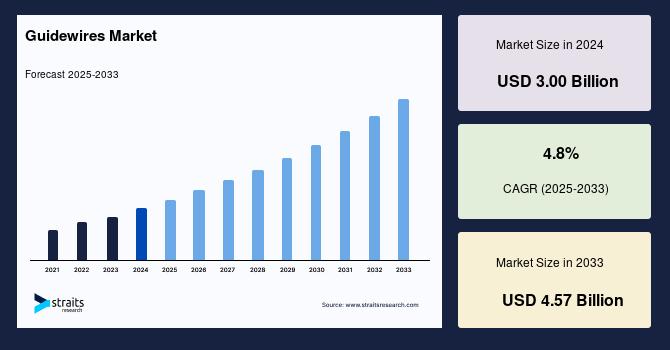
Guidewires Industry Insights: Straits Research recently introduced the latest update on the Guidewires Market that provides an extensive outlook of the market, analyzing key growth opportunities, challenges, risk factors, and emerging trends across diverse geographic regions. The report offers a definitive and meticulous analysis of the Guidewires industry size, share, demand,...
En explorant Teyvat, vous avez sans doute remarqué les Sanctuaires des profondeurs, ces pavillons translucides fermés par un sceau. Il en existe deux types, chacun lié à une région : les sanctuaires de Mondstadt et ceux de Liyue. Pour les ouvrir, vous aurez besoin respectivement de Clés au Sanctuaire des profondeurs de Mondstadt et de Clés au...

Neverness to Everness is offering you a chance to get a head start before launch with the "Hethereau Residents Guide" web event. Running from March 26 to April 28, 2026, it ends just one day before the game officially releases, and completing it takes only a few minutes. If you plan to play at launch, this is essentially free early progress. What You Can Earn By participating, you can secure...
Netflix has secured global rights to the acclaimed Australian romantic comedy "Ali’s Wedding," excluding territories such as Australia, New Zealand, and China. The film has garnered numerous accolades, including the Audience Award at the Sydney Film Festival and the Age Critics Award at the Melbourne International Film Festival. It received seven nominations at the Australian Academy of...
The Submarine Optical Fiber Cable Market is set to witness remarkable growth, propelled by an ever-increasing demand for high-speed connectivity. With a projected compound annual growth rate (CAGR) of 6.12%, the market size is anticipated to expand from USD 20.44 billion in 2024 to a staggering USD 39.28 billion by 2035. This upward trajectory is primarily driven by technological innovations...