Dissecting the Competitive Landscape of the Unified Network Management Market Share

The Incumbent Giants: Leveraging the Power of the Full Stack
A substantial portion of the Unified Network Management Market Share is firmly controlled by the major incumbent networking hardware manufacturers. Companies like Cisco, Hewlett Packard Enterprise (HPE) through its Aruba division, and Juniper Networks command a dominant position by offering a "full stack" solution. Their strategy is to provide not only the network infrastructure itself—the routers, switches, and access points—but also the tightly integrated management platform designed to control it. For instance, Cisco promotes its DNA Center for its Catalyst and Nexus portfolios and the Meraki dashboard for its cloud-managed line, while HPE pushes Aruba Central for its end-to-end networking solutions. The immense advantage of this approach is the promise of seamless integration and a "single throat to choke." Customers who have standardized on a single vendor for their hardware are strongly incentivized to use that vendor's management platform, as it guarantees compatibility and often unlocks advanced features that are not available when using a third-party tool. This creates a powerful, self-reinforcing ecosystem and a high degree of customer stickiness, allowing these giants to leverage their massive installed base to maintain and defend their significant market share against all challengers.
The Hardware-Agnostic Challengers: Champions of the Multi-Vendor Environment
Vying for market share against the incumbents is a strong and diverse field of hardware-agnostic software vendors. These companies, including prominent players like SolarWinds, Broadcom, and Progress (with WhatsUp Gold), have built their businesses on the principle of open, multi-vendor support. Their core value proposition is that in the real world, very few large enterprises have a network built entirely from a single vendor's equipment. Most have a heterogeneous mix of hardware acquired over many years or through mergers and acquisitions. These specialized UNM vendors provide a platform that can discover, monitor, and manage devices from Cisco, Juniper, Aruba, Dell, and dozens of other manufacturers, all from a single console. This flexibility is their key competitive differentiator. They appeal to customers who prioritize choice and want to avoid the vendor lock-in associated with the full-stack providers. These challengers often compete by offering deep, specialized functionality in areas like performance monitoring, traffic analysis, or automated reporting that can sometimes surpass the capabilities of the more generalized platforms from the hardware giants. Their success demonstrates a persistent and significant demand for best-of-breed, vendor-neutral management solutions in the complex enterprise market.
The Rise of Cloud-Native and AIOps-Focused Disruptors
A newer and increasingly influential category of competitors consists of cloud-native and AIOps-focused disruptors who are challenging the traditional paradigms of network management. Companies like anecdotally, Datadog and others are extending their observability platforms from applications and infrastructure into the network domain, offering a fresh, developer-centric approach. These platforms are born in the cloud and are designed to manage modern, dynamic, and ephemeral cloud and container-based environments. Their primary strength is their ability to correlate network performance data with application and user-experience data, providing a true "full-stack observability" that traditional network-centric tools often lack. Another group of disruptors is focused squarely on Artificial Intelligence for IT Operations (AIOps). Players like Juniper's Mist AI are leading the charge by using machine learning and data science to move beyond reactive monitoring to proactive and predictive network management. They can automatically identify anomalies, predict failures before they happen, and even suggest or automatically implement remediation actions. This shift from manual, human-driven operations to an AI-driven, self-healing network represents a fundamental change, and the vendors who can successfully deliver on the promise of AIOps are poised to capture significant market share in the future.
Strategic Alliances, M&A, and Open Source as Competitive Levers
The battle for market share is not just fought through product development; it is also waged through strategic maneuvers like mergers and acquisitions (M&A), partnerships, and engagement with open-source communities. M&A is a primary tool for large companies to quickly acquire new technology and talent. A major networking vendor might acquire a promising AIOps startup to instantly bolster its AI capabilities and eliminate a future competitor. Strategic alliances are also critical. A UNM vendor might partner with a major cloud provider like AWS or Azure to provide deeper integration and co-market their solution on the cloud marketplace. They might also partner with security vendors to build a more comprehensive SASE offering. Engagement with open-source projects is another emerging competitive strategy. By contributing to and leveraging open-source monitoring and automation tools (like Prometheus, Grafana, or Ansible), vendors can accelerate their own development, tap into a large community of users, and demonstrate a commitment to open standards, which can be a powerful differentiator. The competitive landscape is thus shaped not only by the products companies sell but also by the ecosystems they build, the companies they acquire, and the communities they engage with.
Top Trending Reports:
Κατηγορίες
Διαβάζω περισσότερα
PUBG Mobile 3.5 Update Overview Following the highly successful launch of the PUBG Mobile 3.4 update, Tencent is gearing up to roll out the exciting 3.5 beta version, packed with fresh content and features. The latest beta is now available for download, offering players a sneak peek into upcoming enhancements. With the festive season approaching, the 3.5 update is themed around winter and...

The Cloud Content Delivery Network market is on the verge of significant transformation with a projected market size reaching USD 52.25 billion by 2035. This shift represents an impressive compound annual growth rate (CAGR) of 13.97%, indicating robust demand for CDNs driven by technological advancements and a growing digital economy. Companies are increasingly seeking solutions that offer low...

It’s been a blast revisiting The Elder Scrolls Online for Choose My Adventure. Thanks to everyone who voted me into Tamriel this past month. This week I dove deeper into the Rift—the zone where my in-game house is parked—and what I found was a gorgeous contrast between launch-era content and the sharper writing of recent expansions. The Rift originally was a level 38–43...
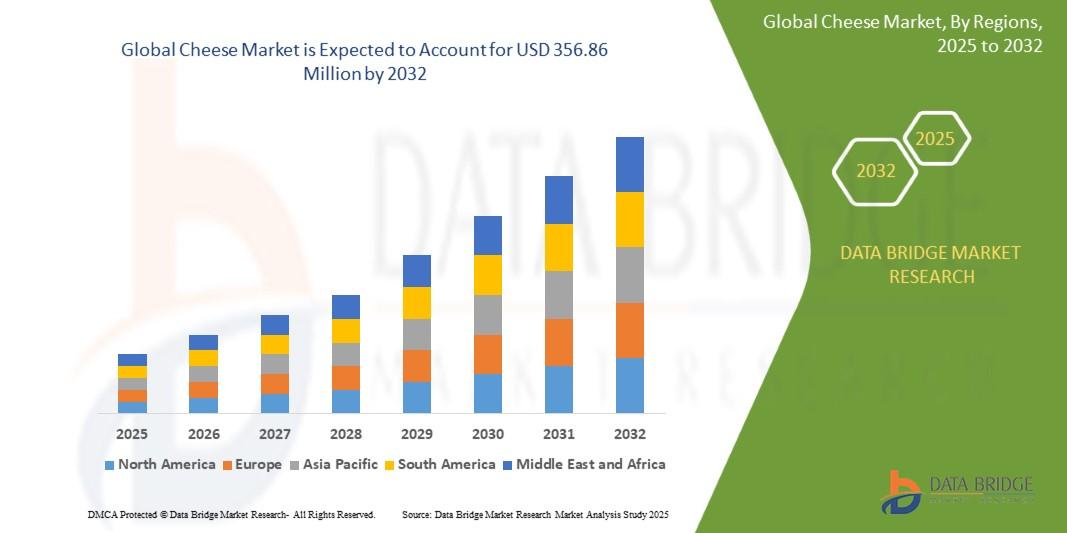
According to the latest report published by Data Bridge Market Research, the Cheese Market The global Cheese market was valued at USD 208.16 million in 2024 and is expected to reach USD 356.86 million by 2032 During the forecast period of 2025 to 2032 the market is likely to grow at a CAGR of 6.97% primarily driven by the increasing consumer demand and rising...
Die lang erwartete Tauschfunktion für Pokémon TCG Pocket rückt näher, startet jedoch mit klaren Grenzen. Ab Januar 2025 wird das Update live gehen, aber nicht alle Karten sind sofort handelbar. Nur ausgewählte Karten werden für den Austausch freigegeben sein. Die Entwickler planen, das Angebot an tauschbaren Karten schrittweise zu erweitern. Zudem sind weitere...