A Definitive Guide to the Global Industrial Automation Services Industry Ecosystem
The Human Expertise Powering the Smart Factory
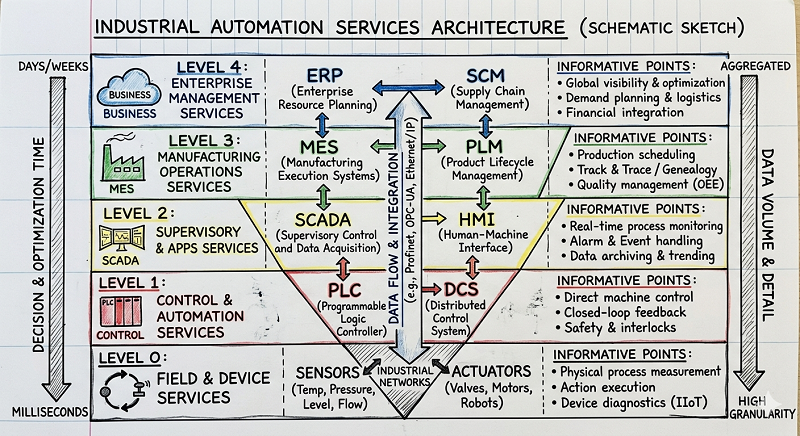
The relentless march of industrial automation is fundamentally reshaping the manufacturing and production landscape, introducing unprecedented levels of efficiency, quality, and safety. However, the sophisticated robots, intelligent sensors, and complex control systems that define the modern factory are only one part of the equation. The true value and operational success of these technologies are unlocked by the human expertise provided by the Industrial Automation Services industry. This vital sector acts as the brain and central nervous system for automated environments, providing the crucial services needed to plan, design, implement, maintain, and optimize these complex systems. It encompasses a broad range of activities, from high-level strategic consulting and detailed system integration to ongoing maintenance and emergency support. Without these services, automation hardware is merely a collection of disconnected and underutilized assets. Service providers ensure that these assets are woven into a cohesive, high-performing system that delivers on the promise of Industry 4.0, making them an indispensable partner in any organization's journey toward becoming a smart, connected, and competitive enterprise in the digital age.
Key Players: The Architects of Automation
The Industrial Automation Services ecosystem is a multi-layered network of specialized players, each contributing a unique skill set. At the top are the Original Equipment Manufacturers (OEMs), global giants like Siemens, ABB, Rockwell Automation, and Schneider Electric. These companies manufacture the core automation hardware and software (PLCs, DCS, robots, etc.) and offer a comprehensive suite of services, often centered around their own product ecosystems. The second, and arguably most crucial, group is the independent System Integrators (SIs). These are the hands-on architects and engineers who possess the deep, vendor-agnostic expertise to design and build custom automation solutions, integrating components from multiple different manufacturers to solve a client's specific problem. A third category includes specialized consulting firms that focus on the strategic aspects of automation, helping companies develop their Industry 4.0 roadmap, calculate ROI, and select the right technologies. Finally, the end-users—the manufacturing plants and industrial facilities themselves—are not just customers but active participants, working closely with service providers to define requirements and upskill their own workforce to operate and maintain the new systems, creating a collaborative and dynamic industry structure.
The Service Lifecycle: From Concept to Continuous Improvement
The engagement with an industrial automation service provider typically follows a well-defined lifecycle that mirrors the lifecycle of the automation project itself. It begins with the Consulting and Conceptualization phase, where service providers work with the client to understand their pain points, identify opportunities for automation, and develop a business case and high-level project plan. This is followed by the Design and Engineering phase, where system integrators create detailed electrical, mechanical, and software designs for the proposed solution. The next step is Implementation and Integration, the hands-on phase where technicians and engineers install the hardware, write the code, and integrate the new system with the factory's existing infrastructure. After installation comes Commissioning and Startup, where the system is rigorously tested and fine-tuned to ensure it meets all performance and safety specifications before being handed over to the client. The relationship does not end here; it transitions into the long-term Operational phase, which involves ongoing maintenance, technical support, and continuous improvement services to optimize and upgrade the system over its entire lifespan, ensuring long-term value and performance.
The Symbiotic Relationship Between Products and Services
A fundamental dynamic of the industrial automation industry is the symbiotic relationship between product sales and service revenue. While the sale of a robot, a PLC, or a software license generates significant upfront revenue for OEMs, it is the associated services that create a long-term, stable, and often more profitable relationship with the customer. Every piece of hardware sold creates a future service opportunity, from initial installation and integration to ongoing maintenance contracts, spare parts management, software updates, and eventual modernization. For customers, these services are not optional add-ons; they are essential for maximizing the uptime, performance, and lifespan of their expensive automation assets. This creates a powerful recurring revenue model for service providers and deepens their role as a strategic partner rather than just a one-time vendor. This interplay ensures that as the installed base of automation technology grows globally, the demand for the skilled services required to support that technology grows in lockstep, creating a resilient and continuously expanding market for the entire industry.
Explore More Like This in Our Reports:
Κατηγορίες
Διαβάζω περισσότερα
Logitech, a leading manufacturer of computer accessories and electronic devices, has publicly acknowledged a recent security breach resulting from a cyberattack carried out by the Clop ransomware group. This attack targeted the company's data systems in July, specifically exploiting a vulnerability related to Oracle's E-Business Suite. The Swiss-based multinational company, renowned for its...

Real-time analytics is no longer just a feature in the Logistics SaaS Market; it is the core engine driving competitive advantage in an era of rapid customer expectations. By integrating advanced data analytics platforms with logistics workflows, companies can now gain real-time visibility into their entire distribution network, from raw material sourcing to the final mile delivery....

HBO Max is set to debut its standalone streaming service in the United Kingdom and Ireland starting March 26, marking a significant expansion into these markets. Subscribers will gain access to a diverse library that includes content from HBO, Warner Bros. Pictures, Warner Bros. Television, DC Studios, and Max Originals. The service offers four different subscription options: two with...
Weekly Trial Strategy Focus on completing the weekly trials to climb the competitive leaderboard. Each week presents five rotating challenges, where maximizing your score is key for advancement. Many players aim for the 4000-point threshold to secure the three-star weekly rewards efficiently. To excel, prioritize locating and securing raider caches effectively during these missions. This...
Categorizing the Vast World of SaaS The Software as a Service market is not a single, monolithic entity but a sprawling ecosystem composed of numerous distinct application categories. To understand the market's structure, it's essential to analyze the different Software As A Service Market Types, each designed to address a specific set of business functions and challenges. These types...