The On-Device Revolution: A Deep Dive into the Global Mobile AI Industry
The Shift from Cloud to Edge in Artificial Intelligence
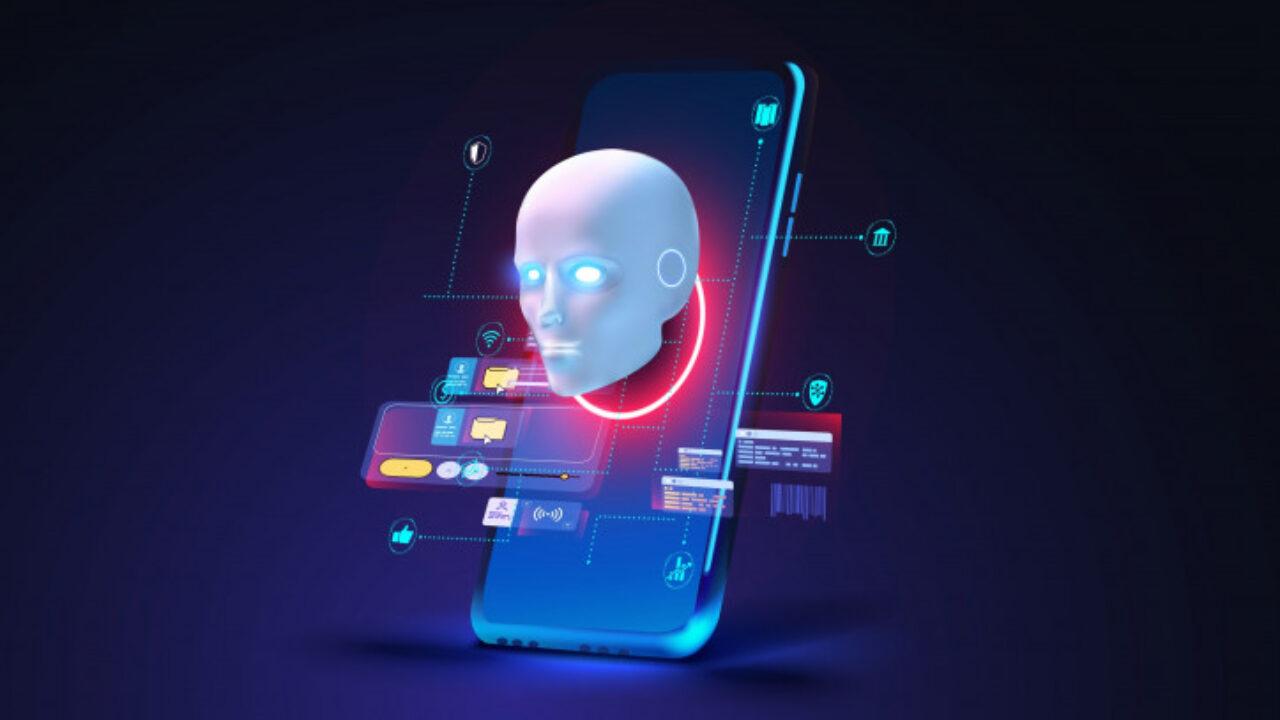
The landscape of artificial intelligence is undergoing a profound and rapid transformation, shifting from a purely cloud-based model to one where intelligence resides directly on our personal devices. The mobile AI market is the epicenter of this revolution, representing the ecosystem of hardware, software, and algorithms that enable powerful AI processing on smartphones, wearables, and other portable gadgets without a constant need for an internet connection. This on-device processing delivers significant advantages in speed, privacy, and efficiency, allowing for real-time applications like instant language translation, advanced computational photography, and responsive voice assistants. As detailed in a comprehensive report by Market Research Future, the burgeoning Mobile Ai industry is not just an incremental improvement but a fundamental re-architecture of how we interact with technology. It is turning our smartphones from simple communication tools into proactive, context-aware companions that can understand, predict, and act on our behalf. This industry is the driving force behind the next generation of mobile experiences, making our devices more personal, intuitive, and secure than ever before.
Core Technologies: The NPU and the Rise of AI Chipsets
At the heart of the mobile AI industry lies a crucial piece of specialized hardware: the Neural Processing Unit (NPU). Unlike a general-purpose Central Processing Unit (CPU) or a graphics-focused Graphics Processing Unit (GPU), an NPU is a microprocessor designed specifically to accelerate the mathematical operations at the core of machine learning and neural network models. This specialization allows it to perform complex AI tasks, such as image recognition or natural language processing, with vastly greater speed and energy efficiency. Major chipset manufacturers have all developed their own powerful NPUs, which are integrated into their System-on-Chip (SoC) designs. Apple has its "Neural Engine," Google has its "Tensor Processing Unit" in its Pixel phones, Qualcomm has its "AI Engine," and MediaTek has its "APU" (AI Processing Unit). The relentless competition among these players to create faster and more efficient NPUs is a primary driver of innovation in the market. The integration of this dedicated hardware is the key enabler that has made it possible to run sophisticated AI models—which once required racks of servers in a data center—directly in the palm of your hand.
A Layered Ecosystem of Hardware, Software, and Device Makers
The mobile AI industry is a complex, multi-layered ecosystem with deep interdependencies between different types of players. At the foundational layer are the chipset designers like Qualcomm, Apple, MediaTek, and Samsung, who create the SoCs with integrated NPUs that provide the raw processing power. The next layer is composed of the operating system providers, primarily Google (Android) and Apple (iOS). They are responsible for creating the software frameworks (like Google's Android NN API and Apple's Core ML) that allow application developers to easily access and utilize the underlying AI hardware without needing to be experts in low-level chip architecture. They also develop many of the flagship AI-powered applications, such as Google Assistant and Apple's Siri. The top layer consists of the device manufacturers (OEMs), including Apple, Samsung, Xiaomi, and others, who integrate the chipsets and operating systems into a final product. They often add their own layer of AI software to differentiate their devices, particularly in areas like camera performance and user interface enhancements. The seamless collaboration—and fierce competition—between these three layers is what drives the rapid pace of innovation and adoption across the entire mobile AI industry.
The Vision: Towards Proactive and Ambient Intelligence
The ultimate vision for the mobile AI industry extends far beyond simply making current apps run faster. The goal is to create a state of "ambient intelligence," where our devices become truly proactive and context-aware assistants that anticipate our needs and simplify our lives. The future of mobile AI is not about responding to commands but about predicting intent. For example, your phone might learn your daily commute and proactively check for traffic, suggesting you leave earlier without being asked. It might notice you are in a meeting and automatically silence non-critical notifications. In the future, mobile AI will power more sophisticated on-device health monitoring, analyzing data from wearable sensors to detect early signs of illness. It will enable real-time, augmented reality experiences, providing a constant, intelligent overlay of digital information onto the physical world. As mobile AI becomes more powerful and efficient, it will serve as the distributed intelligence engine for a vast network of personal devices, from our phones and watches to our cars and smart homes, creating a seamless and intelligent ecosystem that works in concert to augment our daily lives.
Explore More Like This in Our Reports:
Asia Pacific Digital Transformation Market
Categorii
Citeste mai mult
Navezgane is home to five unique traders, each stationed in a different biome. They accept Duke Tokens for goods, rotate their stock every few in-game days, and are open from 4:00 to 21:50—if you're still inside at closing time, you'll be kicked out. Every trader offers repeatable missions that reward experience and items, and most missions send you to locations within that trader's own...

The Industrial AI Market Growth trajectory is intrinsically linked to the relentless pursuit of operational efficiency and the accelerating development of autonomous systems in industrial environments. The imperative to improve overall equipment effectiveness and reduce operating costs is a primary catalyst, as AI-driven process optimization and predictive analytics deliver measurable...

The Prep Refrigerator Market is gaining momentum as commercial kitchens increasingly require flexible, reliable, and space-efficient refrigeration solutions. Restaurants, cafés, institutional kitchens, and other foodservice businesses depend on refrigeration to protect fresh ingredients and maintain efficient preparation workflows. Prep refrigerators can combine storage capacity with...

A comprehensive Security System Integrators Market Analysis reveals a dynamic sector poised for significant expansion driven by regulatory compliance requirements, escalating security threats, and technological advancement. Organizations across industries face increasingly stringent regulations governing data protection, privacy, and workplace safety that mandate implementation of advanced...
The high-stakes arena of Squid Game is about to get a glamorous upgrade. A new wave of competitors is stepping into the deadly playground, trading their usual spotlight for the chilling challenges of Squid Game: The VIP Challenge. From reality TV royalty to sports legends, the roster is star-studded. Real estate titan Ryan Serhant, NBA champion Tristan Thompson, and pop icon Mel B are among...